Functional Medicine for
Endometriosis and Polycystic Ovary Syndrome PCOS
Why Endometriosis and PCOS Require a Whole-Body Approach

For many women, being diagnosed with endometriosis or PCOS (Polycystic Ovary Syndrome) comes with more questions than answers.
You may have been told your pain is “normal,” that irregular cycles are just something to manage, or that birth control is your only option. Some women are even left feeling like their symptoms are something they simply have to live with—or that their chances of having children may be limited.
It can feel frustrating, overwhelming, and at times, isolating.
Many women feel dismissed, hopeless, and even scared when these are presented as the only options. The constant pelvic pain, heavy periods, fatigue, mood swings, and worry about future fertility can feel overwhelming and isolating. It’s exhausting to be told there’s nothing more that can be done.
But just because something is common, that doesn’t make them normal—and it doesn’t mean you should have to accept ongoing pain, fatigue, or hormonal imbalance as your baseline.
At Premier Integrative & Functional Medicine, we understand that endometriosis and PCOS are not just reproductive conditions—they are signals from the body that something deeper is out of balance.
And when those underlying imbalances are identified and addressed, real healing—and real relief—is possible.
Why These Conditions Are Often Misunderstood
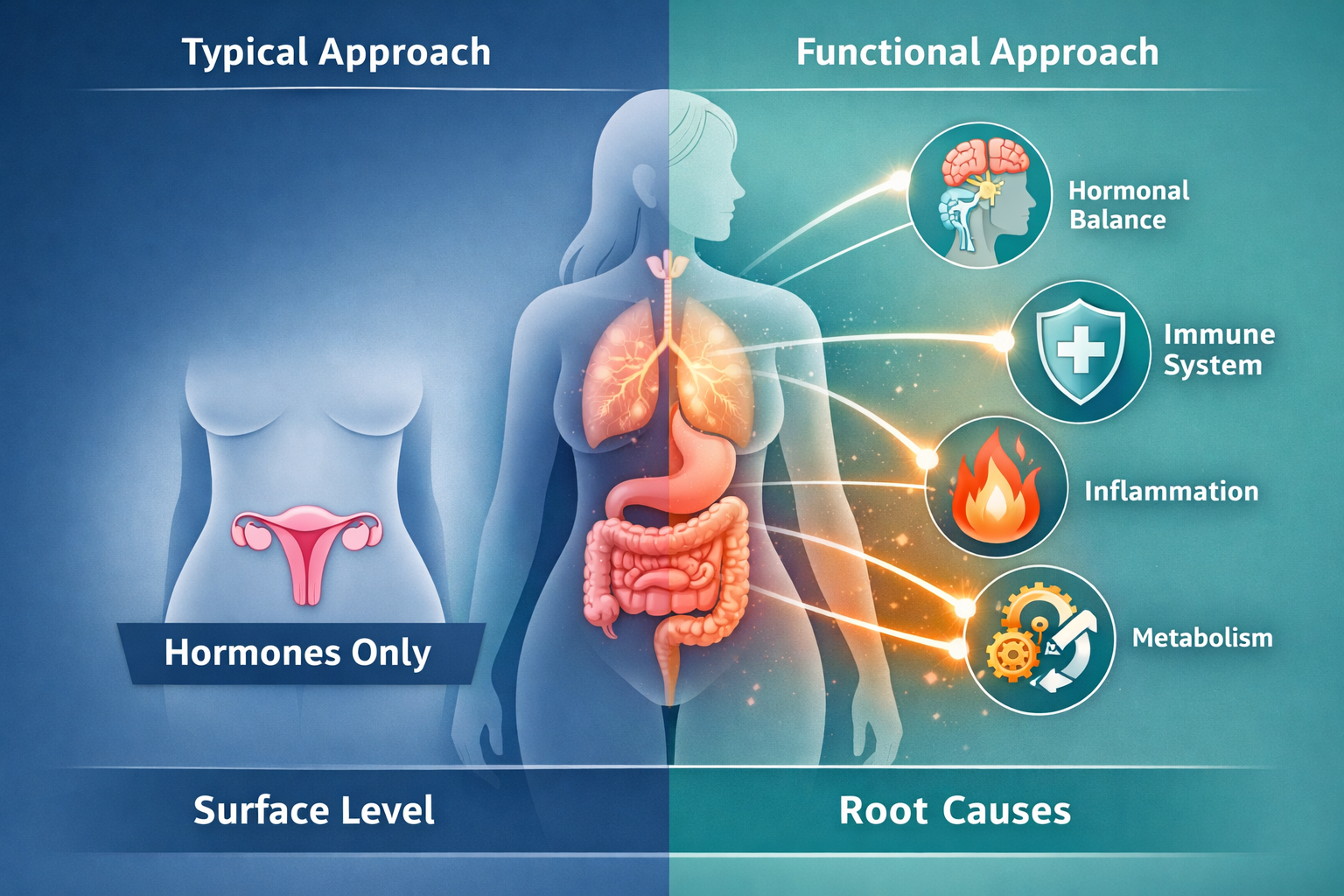
Endometriosis and PCOS are often treated as isolated reproductive conditions, when in reality they are driven by broader, systemic imbalances—not just “reproductive system” issues. Conventional care typically focuses on hormones or surgical interventions, but these conditions involve a complex interplay of inflammation, immune function, gut health, detoxification, and metabolism.
This is exactly why a whole-body, functional medicine approach can be so effective. Instead of focusing on isolated symptoms, it looks at how these systems interact and where imbalances are occurring. When we support and restore these underlying systems, many women experience more lasting relief along with improvements in overall health.
PCOS and endometriosis are influenced by multiple interconnected systems, including:
Hormones
Gut health
Detoxification pathways
This is why identifying and addressing the root causes is essential for creating lasting improvements in these conditions.
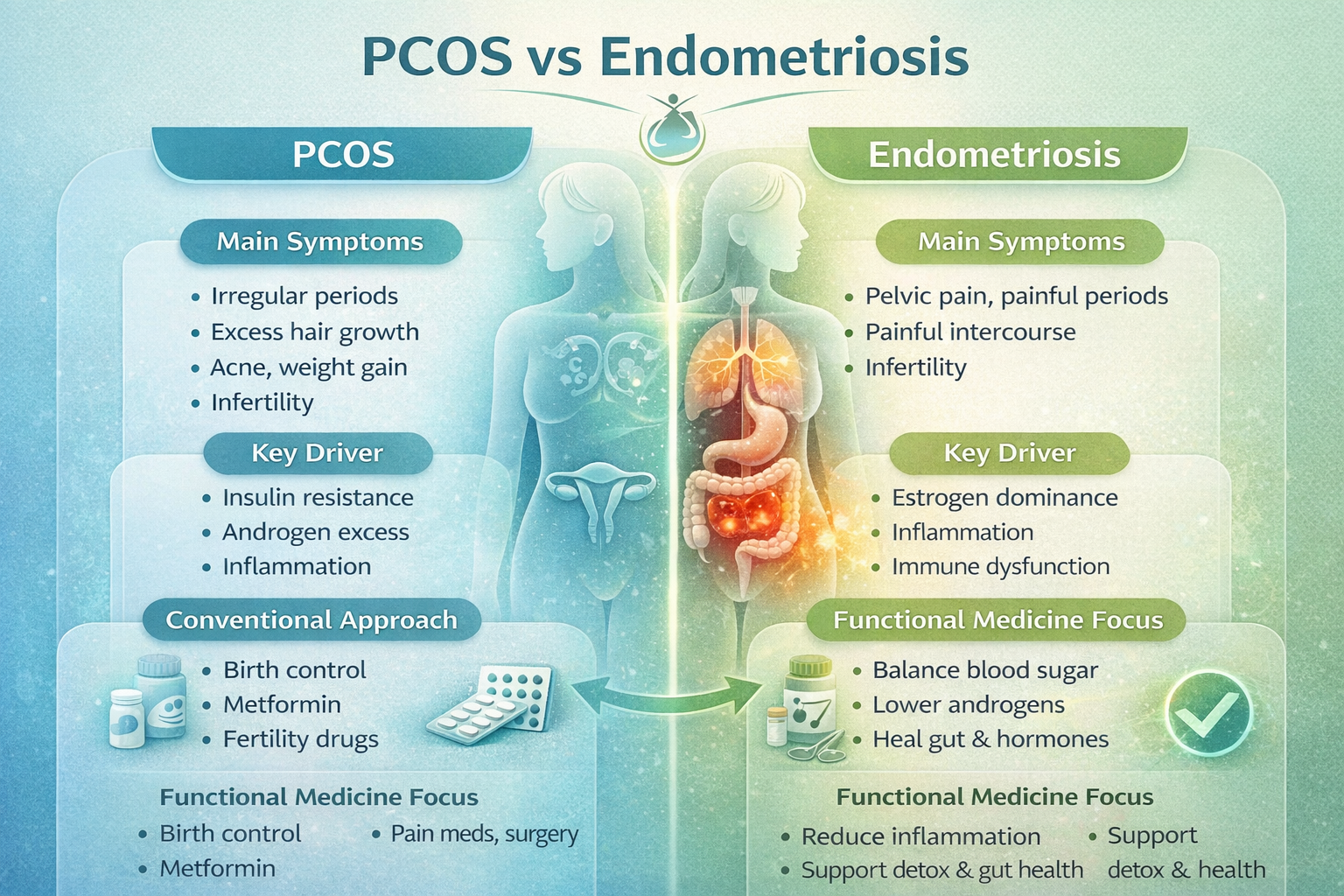
Endometriosis & PCOS at a Glance
Aspect
PCOS - Polycystic Ovary Syndrome
Main Symptoms
Underlying Driver/Root issue
Insulin resistance + androgen excess + inflammation
Conventional Approach
Functional Medicine Approach
Endometriosis
Pelvic pain, painful periods, painful intercourse, infertility
Estrogen dominance + inflammation + immune dysfunction
Birth control, pain meds, surgery
Reduce inflammation, support detox & gut health
Irregular periods, excess hair, acne, weight gain, infertility
Birth control, metformin, fertility drugs
Balance blood sugar, lower androgens, heal gut & hormones
Both conditions share chronic inflammation, hormone imbalance, and gut issues — which is why our approach overlaps so much.
Endometriosis & Polycystic Ovary Syndrome (PCOS) – Quick Facts
Endometriosis
Affects about 1 in 10 women of reproductive age
Characterized by tissue similar to the uterine lining growing outside the uterus
Common symptoms:
Severe menstrual pain
Pain with intercourse
Infertility
PCOS (Polycystic Ovary Syndrome)
Affects up to 10–15% of women
Hormonal and metabolic condition
Common symptoms:
Irregular cycles
Acne and hair growth
Weight gain or difficulty losing weight
Common Root Causes of Endometriosis & PCOS — And How Functional Medicine Helps
While every woman’s story is unique, several key imbalances show up again and again in both conditions:
Chronic Inflammation Both endometriosis and PCOS involve high levels of inflammatory chemicals. Functional medicine works to calm this fire through targeted anti-inflammatory nutrition, supplements, and lifestyle changes — often leading to reduced pain and fewer flare-ups.
Hormone Imbalances & Estrogen Dominance Excess or poorly metabolized estrogen plays a major role in endometriosis, while PCOS often involves elevated androgens. We support healthy hormone metabolism and detoxification pathways so your body can clear excess hormones naturally.
Insulin Resistance & Blood Sugar Dysregulation (especially PCOS) Even in endometriosis, blood sugar swings can worsen inflammation. We help stabilize blood sugar to lower androgens in PCOS and reduce overall inflammatory load.
Gut Health & Microbiome Imbalance “Leaky gut” and dysbiosis are strongly linked to both conditions. Restoring a healthy gut lining and microbiome often improves hormone balance, lowers inflammation, and supports the immune system.
Immune Dysfunction & Environmental Toxins Endometriosis has an autoimmune component, and both conditions can be worsened by toxin exposure (plastics, pesticides, heavy metals). We support gentle detoxification and immune modulation.
How Functional Medicine Helps
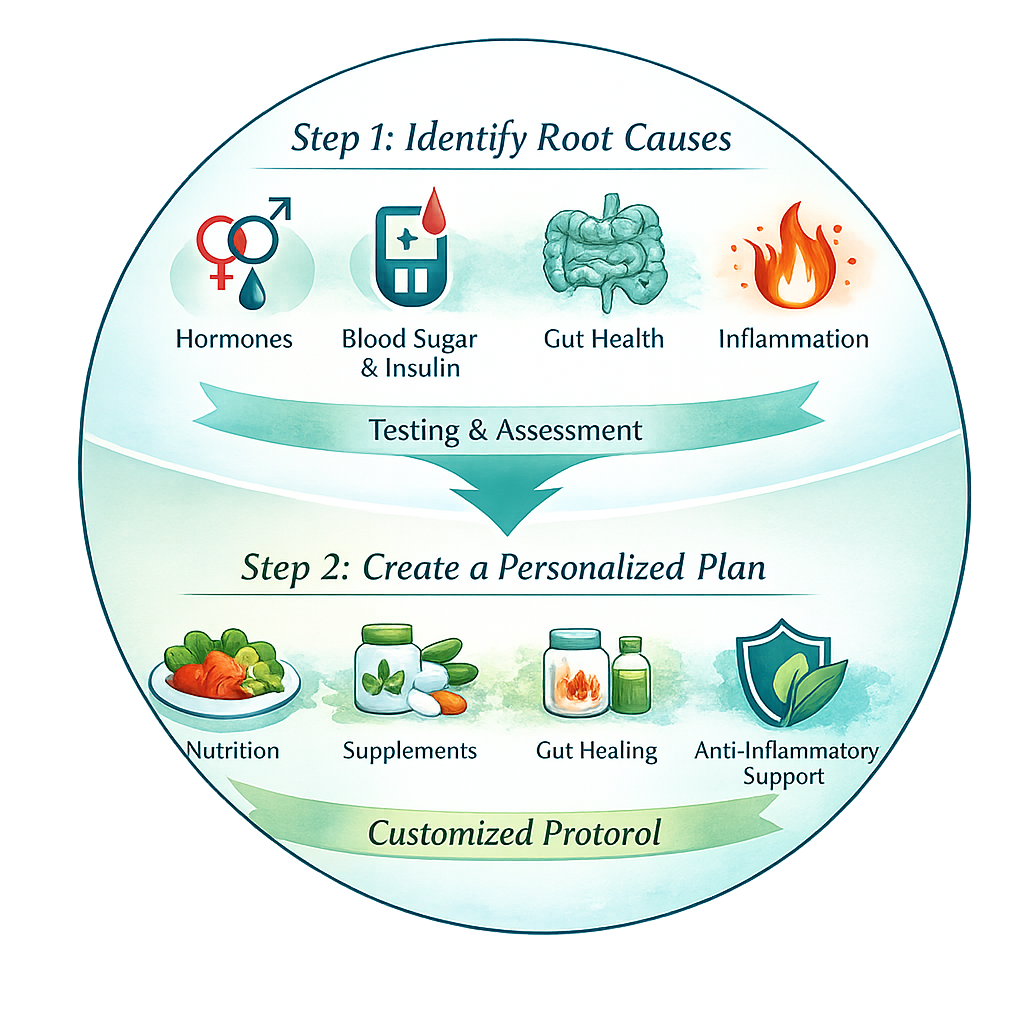
Our approach focuses on identifying and correcting the root causes driving your symptoms.
Step 1: Identify What’s Driving Your Condition
We assess:
Hormones (estrogen, progesterone, testosterone)
Blood sugar and insulin
Inflammation markers
Step 2: Create a Personalized Plan
Your plan may include:
Nutrition to balance hormones and blood sugar
Anti-inflammatory support
Gut healing protocols
Targeted supplementation
Step 3: Restore Balance
As the body returns to balance, many patients experience:
Reduced pain
More regular cycles
Improved energy and mood
Better fertility outcomes

Why a Whole-Body Approach Matters
You cannot fully resolve hormone conditions by only treating hormones.
True healing happens when:
The gut is functioning properly
Blood sugar is stable
Inflammation is reduced
Detox pathways are supported
This is why a functional medicine approach is often more effective for long-term results.
Your Questions, Answered
-
Yes — while every case is different, many women experience dramatic improvement or even reversal of symptoms by addressing root causes like inflammation, gut health, and hormone metabolism.
-
Yes, we can absolutely help. Many of our patients come to us while still using hormonal birth control. We work collaboratively with your current treatment and only recommend changes when it feels safe and appropriate for your body. Our focus is on addressing the underlying root causes so that, over time, many women are able to reduce or eventually discontinue hormonal medications with better symptom control and improved natural hormone balance.
-
Yes. Functional medicine is often very beneficial even after surgery. Many women continue to experience pain, inflammation, or symptom recurrence after surgical removal of endometriosis because the underlying drivers (inflammation, hormone imbalance, gut health, and immune dysfunction) have not been fully addressed. We focus on supporting your body’s healing, reducing inflammation, and preventing regrowth so you can experience longer-lasting relief and better quality of life.
-
No. We work alongside your current treatments and only make changes when it is safe and your body is ready.
-
By balancing hormones and reducing inflammation, many women with endometriosis or PCOS improve their chances of natural conception or better outcomes with assisted reproduction.
-
No. Many women manage PCOS and endometriosis effectively through lifestyle, nutrition, and targeted support that addresses insulin resistance and hormone balance.
-
Unfortunately, many conventional approaches focus on symptom management—but there are additional approaches that address root causes.
-
If you have a PPO plan, some of the specialized labs we order may be covered by your insurance. For office visits, we provide a detailed superbill that you can submit to your insurance company for possible reimbursement.
If you’ve been told there are no other options, it may be time to take a different approach.
At Premier Integrative & Functional Medicine, we help uncover the root causes of endometriosis and PCOS—so your body can begin to heal.
Schedule your consultation today and take the first step toward lasting relief.
More Light reading. Check out our related Blog posts and research in the area