
Functional Medicine for
Cognitive Decline and Brain Health
Exploring Neuroinflammation, Cellular Health, and the Metabolic Drivers of Cognitive Decline
"The Chief function of the body is to carry the brain around. " - Thomas Edison
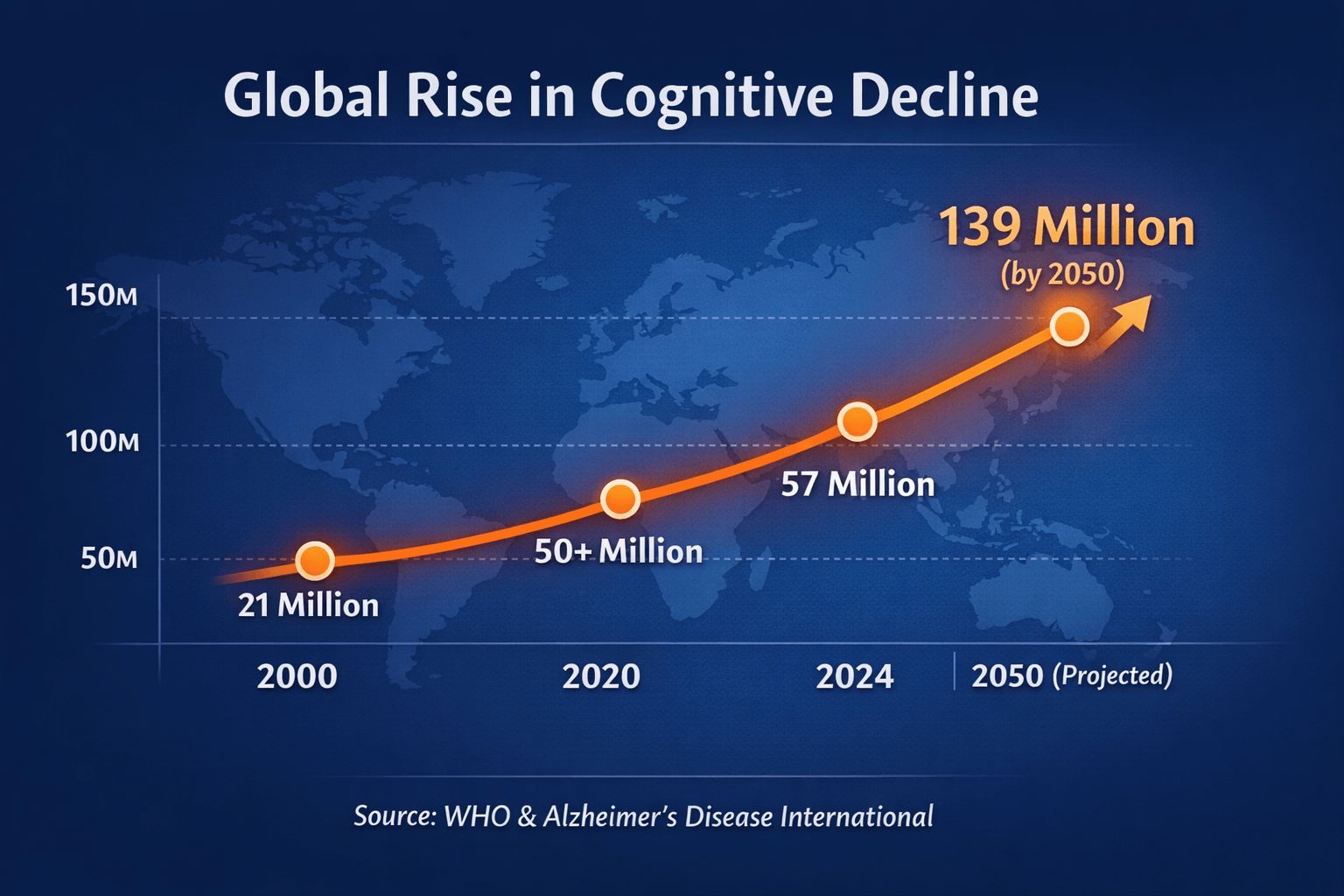


Neurodegenerative diseases are becoming one of the fastest-growing health challenges in the world. According to the World Health Organization, more than 57 million people worldwide are currently living with dementia, and nearly 10 million new cases are diagnosed every year. Alzheimer’s disease accounts for roughly 60–70% of these cases, making it the most common cause of cognitive decline.
And dementia is only part of the story.
Recent global health data suggest that neurological conditions as a whole affect more than 3 billion people worldwide, making disorders of the brain and nervous system the leading cause of illness and disability globally.
1 in 3 people worldwide will be affected by a neurological disorder
However, these statistics only capture individuals who have received a formal medical diagnosis.
Millions more people experience early signs of declining brain health long before a disease like Alzheimer’s or Parkinson’s is identified. Symptoms such as brain fog, poor concentration, memory lapses, mood instability, mental fatigue, sleep disruption, and slowed thinking are extremely common — yet they are rarely recognized as early indicators of neurological dysfunction.
In functional medicine, these symptoms are not simply dismissed as “normal aging.” Instead, they are viewed as early warning signals that the brain’s metabolism, inflammatory balance, or cellular energy systems may be under stress.
Modern healthcare has made tremendous progress in helping people live longer lives. But longer lifespan does not always mean better quality of life. Many adults over the age of 50 struggle with declining memory, reduced mental clarity, and changes in mood or motivation that gradually interfere with daily life.
The brain is made up of multiple specialized regions, each responsible for different functions such as memory, emotional regulation, decision making, coordination, and energy regulation. When certain areas begin to lose optimal function, specific patterns of symptoms begin to appear.
Below, we will explore some of the major brain regions involved in cognitive health, along with the most common signs and symptoms that patients often experience when these systems begin to decline.
Why Cognitive Decline Is Increasing Worldwide
Rates of cognitive decline and neurodegenerative disease have been rising steadily over the past several decades. While aging populations certainly contribute to this trend, researchers increasingly recognize that lifestyle, environmental exposures, and metabolic health play a major role in brain aging.
The brain is one of the most energy-demanding organs in the body. It requires a constant supply of oxygen, nutrients, healthy blood flow, and properly functioning mitochondria to maintain memory, focus, mood stability, and cognitive performance. When these systems begin to break down, the brain becomes vulnerable to inflammation, oxidative stress, and metabolic dysfunction.
Several major factors appear to be driving the global increase in cognitive decline.

Chronic Inflammation and Neuroinflammation
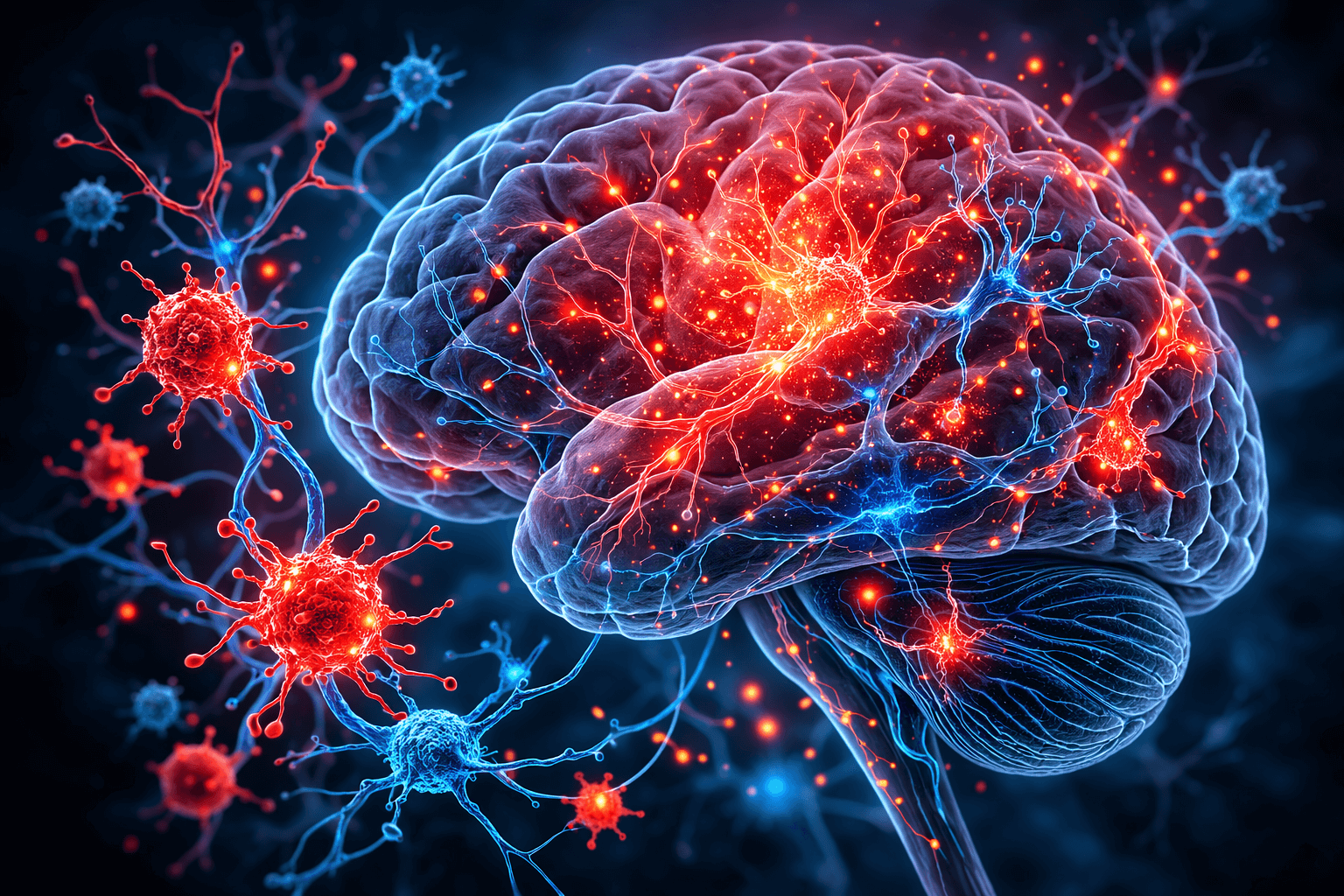
One of the most important drivers of brain degeneration is chronic inflammation. In functional medicine this is often referred to as neuroinflammation, a state where the brain’s immune system remains persistently activated.
This inflammatory response can be triggered by a variety of stressors including:
Poor diet and excess sugar intake
Chronic infections
Gut microbiome imbalances
Over time, this inflammatory environment can damage neurons and interfere with communication between brain cells.
Metabolic Dysfunction and Blood Sugar Imbalance
The brain relies heavily on glucose metabolism for energy. When blood sugar regulation becomes impaired, the brain’s ability to produce energy declines.
Researchers now sometimes refer to Alzheimer’s disease as “Type 3 Diabetes” because of its strong association with insulin resistance in the brain.
Conditions that increase metabolic stress on the brain include:
Insulin resistance
Type 2 diabetes
Obesity
Chronic high sugar intake
Poor mitochondrial function
These metabolic disturbances can gradually impair memory, concentration, and overall cognitive performance.

Environmental Toxicity
Modern life exposes the brain to thousands of environmental chemicals and toxins that did not exist in previous generations. Heavy metals, pesticides, plastics, air pollution, and industrial chemicals have all been linked to neurological stress and impaired brain function.
Many of these compounds can cross the blood-brain barrier, where they may contribute to inflammation, oxidative damage, and disrupted cellular signaling.
Sleep Deprivation and Chronic Stress
Sleep plays a critical role in brain repair and detoxification. During deep sleep, the brain activates a system known as the glymphatic system, which helps clear metabolic waste products and toxins from neural tissue.
Chronic sleep deprivation, high stress levels, and irregular circadian rhythms can interfere with this cleansing process, allowing inflammatory waste products to accumulate in the brain.
Over time, this can contribute to impaired memory, mood instability, reduced focus, and accelerated brain aging.
Nutrient Deficiencies and Mitochondrial Dysfunction
Brain cells depend on specific nutrients to maintain energy production and protect against oxidative damage. Deficiencies in nutrients such as B vitamins, omega-3 fatty acids, magnesium, vitamin D, and antioxidants can impair mitochondrial function and increase susceptibility to neurological decline.
Without adequate cellular energy production, neurons struggle to maintain normal communication and repair processes.
Early Warning Signs of Cognitive Decline
Most neurodegenerative diseases do not appear suddenly. In many cases, the brain begins showing subtle signs of dysfunction years or even decades before a formal diagnosis is made.
Unfortunately, these early symptoms are often dismissed as normal aging, stress, or simply “being busy.” From a functional medicine perspective, however, these warning signs may indicate underlying inflammation, metabolic dysfunction, nutrient depletion, or impaired cellular energy production in the brain.
Recognizing these symptoms early provides an opportunity to intervene before significant neurological damage occurs.
-
Many people describe this as a feeling of mental cloudiness or difficulty thinking clearly. Tasks that once felt simple may require more effort, and concentration may become more difficult to maintain.
Brain fog is often associated with inflammation, blood sugar imbalance, poor sleep, gut dysfunction, and toxin exposure.
Memory Lapses and Forgetfulness
Occasional forgetfulness can happen to anyone, but frequent memory lapses may indicate early cognitive stress.
Common examples include:
Forgetting names or appointments
Misplacing items more frequently
Difficulty recalling recently learned information
Repeating the same questions or conversations
These symptoms may reflect dysfunction in brain regions responsible for memory formation and recall, such as the hippocampus.
-
Another common symptom is a reduced ability to focus on tasks for extended periods of time. People may find themselves easily distracted, struggling to complete projects, or feeling mentally fatigued after activities that previously felt manageable.
This can be linked to dysfunction in the prefrontal cortex, the brain region responsible for attention, decision-making, and executive function.
-
Changes in mood can also reflect underlying brain dysfunction. Some individuals experience increased irritability, anxiety, depression, or emotional volatility without an obvious cause.
Inflammation, neurotransmitter imbalance, and stress hormone dysregulation can all influence mood regulation pathways in the brain.
Poor Sleep and Circadian Rhythm Disruption
Sleep disturbances are extremely common in individuals experiencing early cognitive decline.
Symptoms may include:
Difficulty falling asleep
Frequent nighttime awakenings
Waking up feeling unrefreshed
Daytime fatigue
Because sleep plays a critical role in brain detoxification and cellular repair, poor sleep can accelerate neurological stress over time.
-
Many patients report a gradual decline in mental stamina and motivation. Activities that once felt engaging may begin to feel overwhelming or mentally draining.
This symptom is often associated with mitochondrial dysfunction, where brain cells struggle to produce adequate energy.
-
Early changes in language centers of the brain can affect verbal communication.
Common symptoms include:
Difficulty finding the right words
Pausing frequently while speaking
Losing track of thoughts mid-sentence
Trouble recalling names or common terms
Using incorrect words without realizing it
-
IteSome forms of cognitive decline affect how the brain processes visual information and spatial orientation.
Possible symptoms include:
Difficulty judging distance
Trouble navigating familiar places
Getting lost easily
Problems with depth perception
Difficulty recognizing faces or objectsm description
-
Certain brain regions control coordination, balance, and physical movement.
Early signs can include:
Clumsiness or poor coordination
Increased falls or balance issues
Tremors or shaking
Slower movements
Difficulty with fine motor tasks (buttons, writing)
-
In some cases, the brain becomes less efficient at interpreting sensory information.
Symptoms may include:
Increased sensitivity to light or sound
Difficulty filtering background noise
Changes in smell or taste
Sensory overload in busy environments
-
Sometimes the earliest signs of brain dysfunction appear as changes in personality or emotional regulation.
Symptoms may include:
Increased irritability
Anxiety or unexplained worry
Depression
Social withdrawal
Reduced emotional resilience

The Amazing Brain
The human brain is one of the most remarkable and complex systems in the body. It controls virtually every function we perform — from movement and memory to emotions, decision-making, and the regulation of vital organs.
Many people have heard discussions about how we lose brain cells over time. While the number of neurons in the brain is important, it is not the only factor that determines brain health. In fact, what often matters more is how well those neurons communicate with one another.
This communication network is known as brain plasticity, or neuroplasticity — the brain’s ability to form new connections, adapt, and reorganize itself throughout life. Healthy brain plasticity allows us to learn new skills, process information efficiently, and maintain strong cognitive function as we age.
Maintaining this flexibility requires regular stimulation of the brain. Activities that challenge the mind, such as learning, problem-solving, reading, or developing new skills, help strengthen neural connections. Physical activity is equally important, as movement improves circulation, oxygen delivery, and overall brain function.
In many ways, protecting brain health requires us to be a scholar, an athlete, or ideally both.
One of the challenges with brain degeneration is that it often occurs slowly and subtly over time. Because these changes develop gradually, many people do not recognize the early warning signs until cognitive function has already been significantly affected. Recognizing and addressing these changes early is one of the most important steps in protecting long-term brain health.
Major Neurodegenerative Diseases
Neurodegenerative diseases are conditions in which brain cells gradually lose function and eventually die. This progressive damage can affect memory, movement, mood, behavior, and many other neurological functions depending on the areas of the brain involved.
While these disorders are often grouped together, each disease affects different brain regions and cellular processes. Below are some of the most common neurodegenerative diseases.
-
Alzheimer’s disease is the most common cause of dementia worldwide. It primarily affects memory, learning, and cognitive function. Over time, patients may experience increasing confusion, difficulty recognizing people or places, and problems performing everyday tasks.
This condition is associated with the buildup of beta-amyloid plaques and tau protein tangles in the brain.
-
Parkinson’s disease primarily affects the movement centers of the brain. It occurs when dopamine-producing neurons begin to degenerate.
Common symptoms include:
Tremors
Muscle stiffness
Slowed movement
Balance problems
Changes in speech or facial expression
Some individuals may also develop cognitive decline as the disease progresses.
-
ALS, often referred to as Lou Gehrig’s disease, is a progressive disorder that affects motor neurons, the nerve cells responsible for controlling voluntary muscle movement.
Symptoms often include:
Muscle weakness
Difficulty speaking or swallowing
Progressive loss of muscle control
Cognitive function is often preserved in many cases, though some individuals may develop frontotemporal dementia.
-
Huntington’s disease is a genetic neurodegenerative disorder that affects movement, mood, and cognition.
Symptoms may include:
Uncontrolled movements (chorea)
Personality and behavioral changes
Cognitive decline
Difficulty with coordination and balance
Because it is inherited, individuals with a family history may be at increased risk.
-
Frontotemporal dementia affects the frontal and temporal lobes of the brain, which control behavior, personality, and language.
Early symptoms often include:
Personality changes
Poor judgment
Loss of social awareness
Difficulty with language and communication
Unlike Alzheimer’s disease, memory loss is often not the first symptom.
-
This form of dementia is caused by abnormal protein deposits known as Lewy bodies that accumulate in the brain.
Symptoms may include:
Cognitive decline
Visual hallucinations
Parkinson-like movement symptoms
Sleep disturbances
Fluctuations in alertness and attention
-
Vascular dementia occurs when reduced blood flow damages brain tissue. This may result from strokes, small vessel disease, or other circulation problems affecting the brain.
Common symptoms include:
Memory problems
Difficulty with planning and decision making
Slowed thinking
Balance issues
Because blood flow is involved, cardiovascular health plays a major role in risk.
-
CTE is a neurodegenerative condition associated with repeated head trauma, often seen in athletes involved in contact sports or individuals exposed to repeated concussions.
Symptoms may include:
Memory loss
Mood changes
Depression or irritability
Impulsive behavior
Cognitive decline later in life
The Three Foundations of Brain Health
-
Although the brain makes up only about 2% of body weight, it consumes roughly 20% of the body’s oxygen supply. Adequate oxygen delivery is therefore essential for maintaining normal brain function.
However, optimal oxygenation of the brain depends on many different systems working together. Reduced oxygen delivery can occur due to issues such as:
Poor circulation
Cardiovascular disease
High or low blood pressure
Abnormal lipid levels
Anemia
Chronic inflammation
Certain autoimmune conditions
Impaired vascular health
For this reason, evaluating brain health requires looking at the entire body, not just the brain itself.
Functional medicine strategies often focus on improving:
Circulation and vascular health
Oxygen-carrying capacity of the blood
Blood flow to the brain
Cellular oxygen utilization
Supporting these systems helps ensure that neurons receive the oxygen they need to maintain normal energy production.
-
Despite many popular claims about “brain foods,” the brain primarily relies on glucose as its main fuel source.
Because of this dependency, the brain is extremely sensitive to problems with blood sugar regulation and insulin signaling.
In fact, Alzheimer’s disease is sometimes referred to as “Type 3 Diabetes” because of the strong connection between cognitive decline and insulin resistance within the brain.
When glucose metabolism becomes impaired, brain cells may struggle to produce the energy needed for memory formation, attention, and normal neuronal communication.
Common factors that disrupt glucose metabolism include:
Insulin resistance
Pre-diabetes and type 2 diabetes
Chronic high sugar intake
Metabolic syndrome
Mitochondrial dysfunction
In our office, blood sugar regulation and metabolic health are evaluated in every patient, because proper glucose utilization is essential for maintaining cognitive performance and long-term brain health.
Improving brain metabolism may involve targeted dietary strategies, lifestyle interventions, and nutraceutical support designed to enhance glucose utilization, insulin sensitivity, and cellular energy production.
-
The third critical component of brain health is stimulation.
The brain is a highly adaptive organ that constantly responds to new challenges and experiences. Activities such as reading, learning new skills, problem solving, social interaction, and physical exercise all stimulate neural pathways and help maintain cognitive resilience.
But stimulation is not only behavioral — it is also biochemical.
Neurons communicate with each other using chemical messengers known as neurotransmitters. These molecules allow brain cells to send signals that regulate mood, memory, motivation, sleep, and emotional stability.
When neurotransmitters become imbalanced, individuals may begin experiencing symptoms such as:
Anxiety
Depression
Mood swings
Poor focus
Fatigue
Sleep disturbances
By carefully evaluating a person’s symptoms and metabolic patterns, functional medicine practitioners can often identify which brain systems may be under stress and which neurotransmitters may require support.
Supporting neurotransmitter balance, improving lifestyle stimulation, and restoring metabolic health can help protect the brain from long-term degeneration.
And in many ways, the old saying remains true:
“Use it or lose it.”
Keeping the brain active, metabolically supported, and properly fueled is one of the most powerful strategies for maintaining cognitive health throughout life.


While oxygen, glucose, and stimulation form the three core foundations of brain health, many different biological systems influence how well these processes function. Factors such as inflammation, circulation, metabolic health, nutrient status, hormones, gut health, and environmental exposures can all interfere with one or more of these foundations. When these systems become disrupted, they can impair oxygen delivery, glucose metabolism, or neuronal communication — gradually contributing to cognitive decline.

The Functional Medicine Approach to Brain Health
Functional medicine looks at cognitive decline very differently than conventional medicine.
Instead of waiting until severe neurological disease develops, the goal is to identify and correct the underlying causes of brain dysfunction years before permanent damage occurs.
Many neurological symptoms are not caused by a single disease, but rather by multiple stressors acting on the brain at the same time. These may include inflammation, metabolic dysfunction, toxin exposure, hormonal imbalance, nutrient deficiencies, poor sleep, chronic infections, or gut microbiome disruption.
When several of these factors occur together, they can overwhelm the brain’s ability to maintain optimal cellular function.
In functional medicine, cognitive decline is often viewed as a systems problem rather than a single diagnosis.
The brain depends on several interconnected systems to function properly, including:
• Blood sugar regulation
• Mitochondrial energy production
• Immune and inflammatory balance
• Gut microbiome health
• Hormonal signaling
• Detoxification pathways
• Adequate nutrient availability
When any of these systems become dysregulated, the brain may begin to experience reduced energy production, impaired communication between neurons, and increased inflammatory stress.


Root Cause Testing for Brain Health
A functional medicine evaluation often includes advanced testing designed to uncover the metabolic drivers of cognitive decline, including:
• Comprehensive blood chemistry analysis
• Inflammatory marker testing
• Blood sugar and insulin regulation markers
• Nutrient status (B vitamins, vitamin D, omega-3s, magnesium)
• Hormone evaluation
• Gut microbiome analysis
• Environmental toxin screening
• Oxidative stress markers
This data allows practitioners to identify early dysfunction patterns that may not yet appear on conventional neurological exams.
Personalized Treatment Strategies
Once the underlying causes are identified, treatment strategies are designed to restore optimal brain function and protect long-term neurological health.
Common interventions may include:
• Anti-inflammatory nutrition strategies
• Blood sugar stabilization
• Targeted nutritional supplementation
• Detoxification support
• Gut microbiome restoration
• Sleep optimization
• Stress regulation
• Mitochondrial support therapies
• Hyperbaric chamber (HBOT)
• Laser therapy
• Red light therapy
• Infrared Sauna
The goal is to restore the conditions that allow brain cells to repair, communicate, and produce energy efficiently.
Rather than simply managing symptoms, functional medicine aims to
slow, halt, or even reverse early cognitive dysfunction by addressing its root causes.
While these systems represent some of the most common drivers of cognitive dysfunction, they are only the beginning. Brain health is influenced by a wide range of interconnected factors throughout the body, and each person’s situation is unique. In many cases, cognitive decline develops when multiple stressors gradually impair the brain’s ability to maintain normal energy production, communication, and repair. A comprehensive functional medicine evaluation looks deeper to identify these underlying contributors and determine which systems may be out of balance. By investigating these root causes early, it becomes possible to develop a personalized strategy aimed at restoring optimal brain function and protecting long-term cognitive health.
Recommended reading: