Functional Medicine for
Mold and Mycotoxin Exposure
When Environmental Exposure Triggers Persistent Symptoms
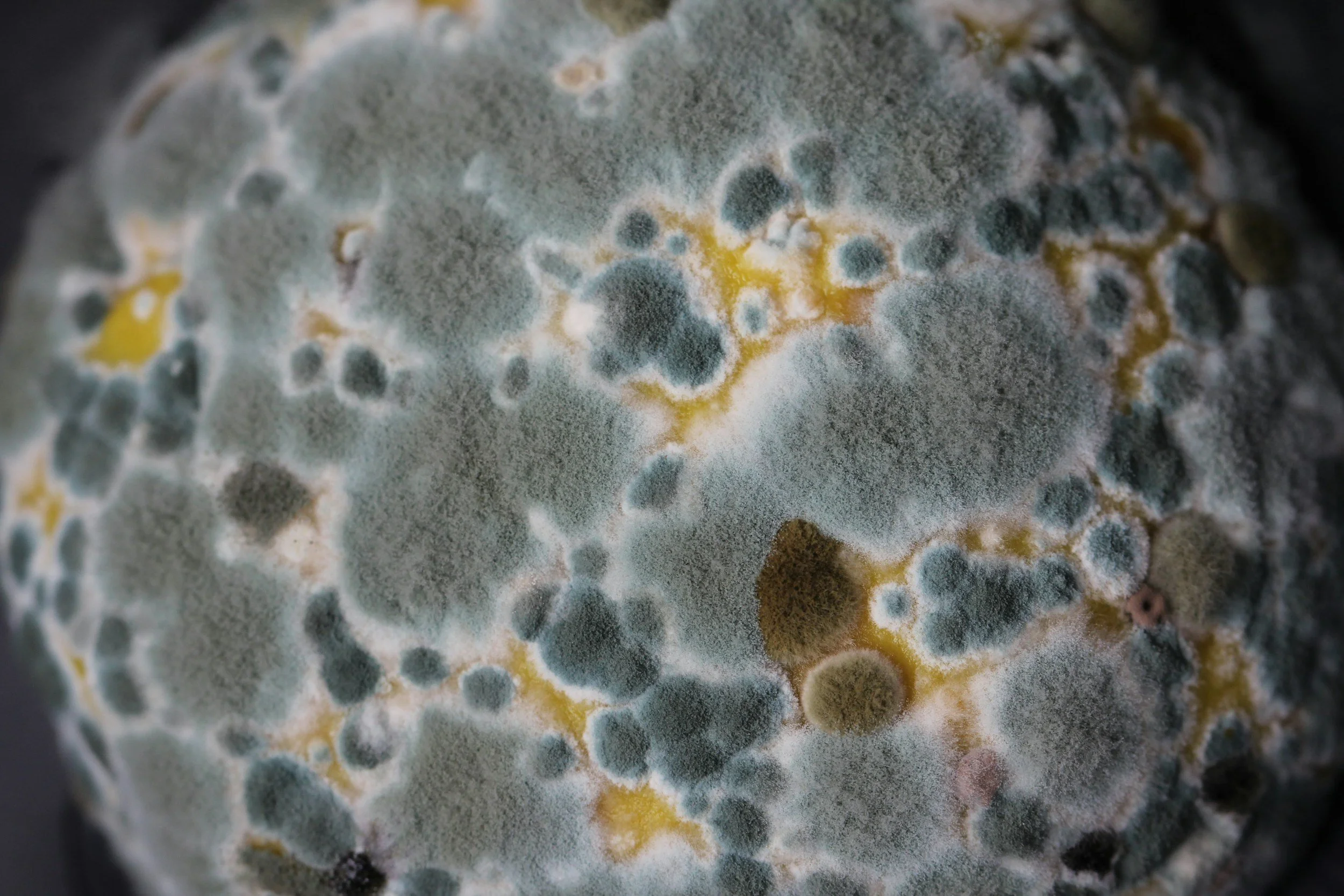

Mold toxicity and mycotoxin exposure have become surprisingly common in today’s world. Modern buildings — with their airtight construction, synthetic materials, and occasional water damage — create ideal conditions for mold to grow and release harmful mycotoxins.
One of the most challenging and frustrating aspects of mold illness is how unevenly it affects people. In the same home or workplace, several people can be exposed to the same mold, yet only one or two develop significant symptoms. Family members or coworkers often don’t understand why one person is struggling so much while others seem completely fine. This can lead to the affected person being dismissed, told “it’s all in your head,” or labeled as overly sensitive or anxious.
The truth is, not everyone reacts the same way. Individual susceptibility depends on genetics (especially detoxification pathways), immune system strength, gut health, previous toxin burden, and overall resilience. Those who become ill are not crazy or imagining their symptoms — they are simply more vulnerable to the toxic effects of mold.
Often times, many patients don’t even realize they’ve been exposed. The symptoms often appear gradually and can feel completely unrelated to their environment. People frequently describe waking up one day and wondering why they suddenly feel so unwell — with fatigue, brain fog, respiratory issues, or mysterious inflammatory symptoms that seem to have come out of nowhere.
Unfortunately, these symptoms rarely disappear on their own. Without identifying and removing the source of exposure — and properly supporting the body’s detoxification and healing processes — recovery can take months or even years.
At Premier IFM, Dr. Craig Mortensen and Nurse Jessica Cardona regularly work with patients dealing with mold toxicity and mycotoxin exposure. They have extensive experience helping people uncover hidden mold sources and address the complex, multi-system effects it creates — even when others in the same home or workplace remain unaffected.
The Problem with the Traditional Approach to Mold and Mycotoxin Illness
Many patients with mold toxicity struggle for years before receiving proper help. Conventional medicine often focuses on treating individual symptoms — prescribing antihistamines for allergies, antidepressants for mood changes, pain medications for headaches, or inhalers for respiratory issues — without investigating the root cause.
Unfortunately, this symptom-masking approach rarely works long-term because it doesn’t address the actual trigger: exposure to mold and mycotoxins. Without identifying and removing the source (exposure and mycotoxins from the body), symptoms frequently persist or return, and patients are often left feeling dismissed or told their symptoms are “all in their head.”
At Premier IFM, we take a completely different approach. We look for the hidden environmental trigger and address the full impact mold has on the body’s multiple systems.
The Facts – You’re Not Alone
Mold exposure and mycotoxin illness are far more common than most people realize:
Up to 50% of buildings in the U.S. have water damage and hidden mold growth.
Mold toxicity can affect anyone, but people with genetic variations in detoxification pathways are significantly more vulnerable.
Many individuals experience symptoms for months or years before connecting them to their environment.
If you’re struggling with unexplained symptoms while others in your home or workplace seem fine, you are not imagining it — and you are not alone.

Common Symptoms of Mold and Mycotoxin Exposure
Mold illness is often called “The Great Masquerader” because it can affect nearly every system in the body. Common symptoms include:
Persistent fatigue and weakness
Headaches or migraines
Respiratory issues (chronic sinus congestion, shortness of breath, cough)
Joint pain and muscle aches
Digestive problems (bloating, nausea, food sensitivities)
Mood changes, anxiety, depression, or irritability
Night sweats or temperature dysregulation
Sensitivity to smells or new chemical intolerances
Numbness or tingling in the hands, feet, arms, or legs
Many patients describe feeling “sick all over” with symptoms that seem unrelated — until the mold connection is discovered.




Where Do the Symptoms of Mold Toxicity Really Come From?
One of the biggest reasons mold illness is so complex is that symptoms don’t come from mold alone. When mold grows in water-damaged buildings, it creates a whole “toxic soup” of different particles and chemicals that can affect your body in many ways.
These include:
Mycotoxins — Toxic chemical compounds produced by mold that can trigger widespread inflammation and affect multiple systems.
Mold spores and fragments — Tiny, airborne particles that are highly durable and can spread easily throughout a building.
Bacteria and their byproducts (including endotoxins/LPS) — These cause strong inflammatory responses and are a major contributor to Chronic Inflammatory Response Syndrome (CIRS).
Microbial Volatile Organic Compounds (mVOCs) — The chemicals responsible for that musty “basement smell” that can irritate the immune system and nervous system.
Beta-glucans and inflammagens — Compounds that further stimulate inflammation and immune activation.
Because of this complex mixture, mold exposure can affect almost every system in the body — from the brain and immune system to hormones, energy levels, and digestion. This is also why two people living in the same moldy environment can have very different symptoms — or why one person becomes ill while others do not.
It is important to be aware of and look at the full picture of what’s happening in your body so we can create a targeted plan to help you recover.
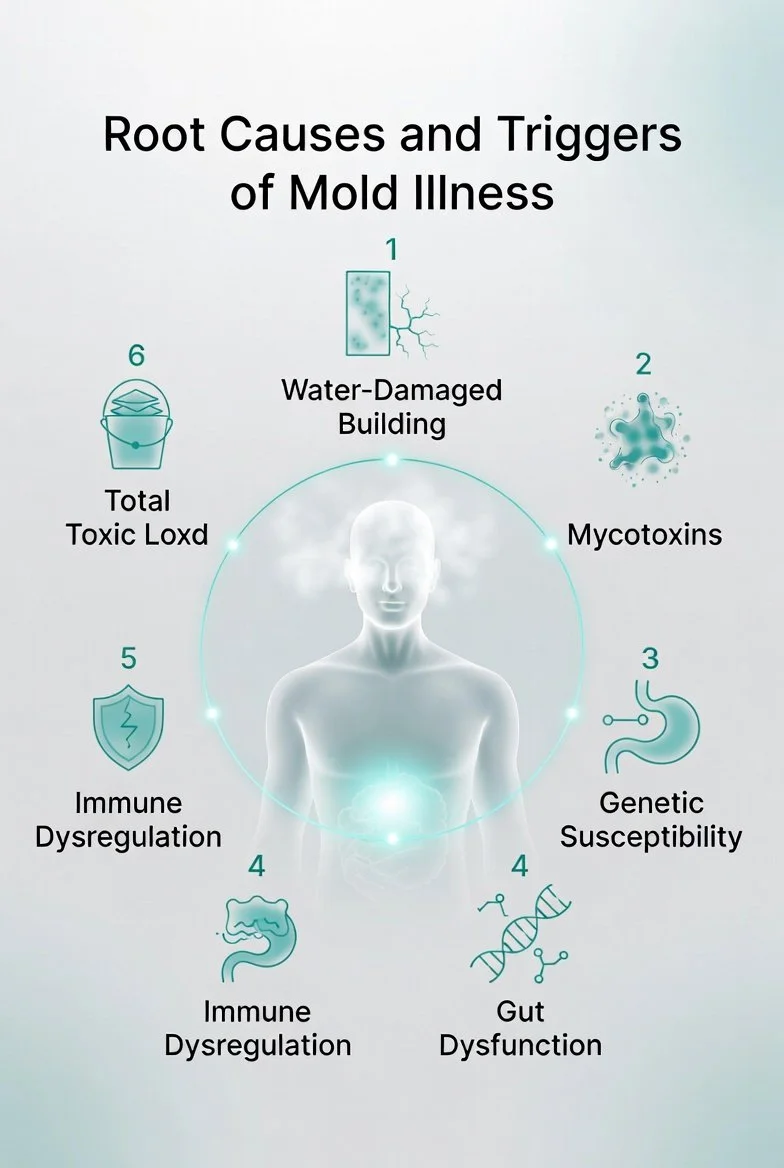
Root Causes and Triggers of Mold-Related Illness
Mold-related illness rarely comes from a single factor. We commonly see:
Water-damaged buildings with hidden mold growth (behind walls, under sinks, in attics, or HVAC systems)
Exposure to mycotoxins (toxic compounds produced by certain molds)
Genetic variations that impair detoxification (especially in the HLA-DR and glutathione pathways)
Compromised gut health and increased intestinal permeability
Pre-existing immune dysregulation or chronic inflammation
High overall toxin burden (heavy metals, chemicals, etc.)
Why Functional Medicine for Mold and Mycotoxin Exposure?
Functional medicine is one of the most effective approaches for mold illness because it addresses the whole person — not just the symptoms. We focus on three essential pillars:
Identify and Remove the Source – Working with patients to locate and remediate (or relocate from) the mold-contaminated environment.
Support Detoxification and Elimination – Helping the body safely clear accumulated mycotoxins.
Heal Affected Systems – Repairing the gut, balancing hormones, calming inflammation, and restoring immune and neurological function.
Our Approach to Mold Recovery
Every patient’s protocol is individualized, but commonly includes:
Comprehensive testing (mycotoxin urine testing, mold-specific immune testing, gut analysis, hormone panels)
Environmental assessment guidance
Targeted binders to remove mycotoxins
Antifungal and antimicrobial support when needed
Gut healing and microbiome restoration
Nutritional support and detoxification pathways optimization
Nervous system and immune regulation
Recovery is possible, but it requires identifying the source and consistently supporting the body’s healing process.
Mold Prevention and Reduction Strategies
Fix water leaks and moisture issues immediately
Use dehumidifiers to keep indoor humidity below 50%
Improve ventilation and use HEPA air filters
Regularly inspect and clean HVAC systems
Avoid carpeting in damp areas
Consider professional mold inspection and remediation when needed - especially if you have unexplained persistent symptoms
Ready to Finally Address Mold Toxicity? If you suspect mold is affecting your health, we’re here to help. Call Now for Your Free Discovery Call — Speak with our team today.
Frequently Asked Questions
-
If you have multiple unexplained symptoms and feel better when you leave a certain building, mold exposure may be a factor. Specialized testing can help confirm it.
-
It depends on the severity and location of the mold. In many cases, proper remediation is necessary before full recovery can occur.
-
It varies widely depending on the level of exposure, how long you’ve been affected, and individual detoxification capacity. Many patients notice improvement within 3–6 months, with deeper healing continuing over 9–18 months.
-
No. Binders are typically used for a limited time to help remove mycotoxins while we support your body’s natural detoxification systems.
-
We do not bill insurance, however, we provide superbills for potential reimbursement and offer transparent self-pay options.
How do you test for Mold Toxicity?
There are two main ways to test for mold toxicity. The first is through a mycotoxins test — we generally use the mycotoxins test from Great Plains Laboratory.
The other way we can reliably test for mold toxicity is through what is known as a Visual Contrast Sensitivity Test. This tests the potential presence of neurotoxins by measuring your ability to see details at low contrast levels and is often used as a nonspecific test of neurological function. Similar in form to a standard audiometry hearing test, a VCS test generally involves the presentation of a series of images of decreasing contrast to the test subject. Then, the contrast levels where patterns, shapes, or objects can or cannot be identified are recorded. The results of the test can then be used as an aid in the diagnosis of visual system dysfunction.