
Guest Blog Written by Maryam Jackson, D.D.S., Owner of Smiles of Orange, Functional and Cosmetic Dentistry for the Whole Family | October 2026
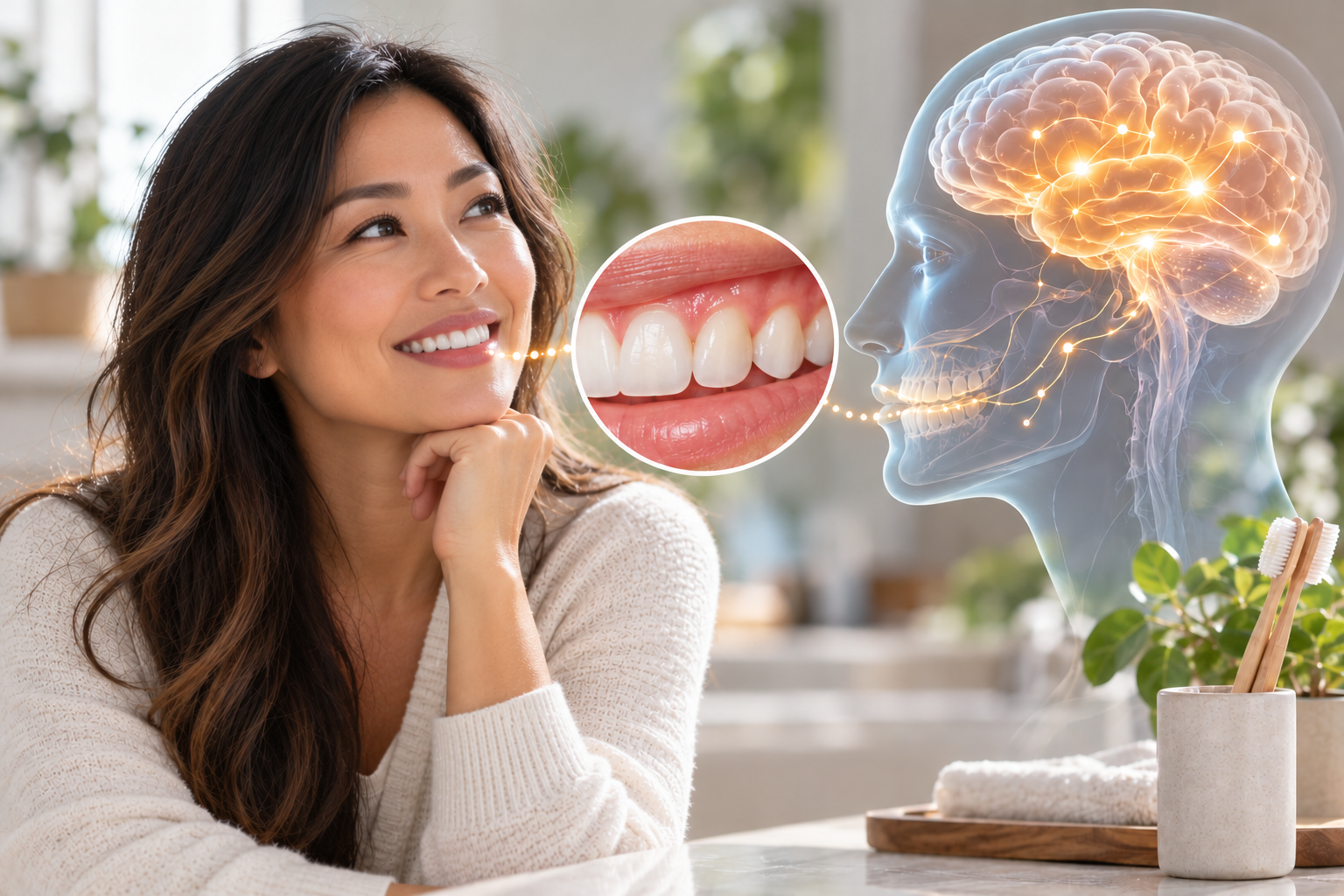
When we think about protecting brain health as we age, we often think about exercise, nutrition, sleep, stress management, and cardiovascular health. But another part of the body deserves more attention: the mouth.
A growing body of research is investigating the relationship between oral health, periodontal disease, the oral microbiome, chronic inflammation, and Alzheimer’s disease.
While researchers have not established that gum disease causes Alzheimer’s disease, studies increasingly suggest that poor oral health, particularly chronic periodontitis, may be associated with an increased risk of cognitive decline and dementia.
This raises a valuable question: Could better oral care also be an important part of brain care?
The Mouth Is Connected to the Rest of the Body
The mouth is not an isolated part of the body.
It contains one of the body's most diverse microbial communities, with hundreds of bacterial species living in the oral cavity. Under healthy conditions, these microorganisms exist in a relatively balanced ecosystem. However, factors such as poor oral hygiene, periodontal disease, smoking, dietary patterns, certain medications, and other influences can contribute to changes in the oral microbiome. This imbalance, sometimes called oral dysbiosis, may contribute to chronic inflammation in the mouth and potentially throughout the body.
Recent research has found associations between oral microbial dysbiosis and Alzheimer's disease, although researchers emphasize that more studies are needed to determine exactly how the relationship works and whether it is causal.
What Is Periodontal Disease?
Periodontal disease is a chronic inflammatory disease that affects the tissues supporting the teeth.
It typically begins with gingivitis, or inflammation of the gums. Without proper management, inflammation can progress to periodontitis, where infection and the inflammatory response begin affecting the deeper tissues and the bone that supports the teeth.
Signs of periodontal disease can include:
Bleeding gums
Red or swollen gums
Persistent bad breath
Gum recession
Tender gums
Loose teeth
Changes in the way teeth fit together
Bone loss around the teeth
From a functional medicine perspective, periodontal disease is particularly interesting because it represents a chronic inflammatory burden that can persist for years.
What Does Gum Disease Have to Do With Alzheimer's?
Researchers are investigating several possible pathways connecting periodontal disease with cognitive decline and Alzheimer's disease.
Chronic inflammation: Periodontal disease can generate a persistent inflammatory response. Inflammation is a key part of the body's defense system. However, chronic inflammation can affect multiple systems throughout the body. Researchers are investigating whether inflammation associated with periodontal disease may contribute to neuroinflammation and other processes involved in cognitive decline.
A 2024 research study found that periodontal disease was associated with cognitive disorders and dementia, although the authors noted limitations in the available evidence and the need for additional research.
The oral microbiome: The oral microbiome is another area receiving significant attention. Certain microorganisms associated with periodontal disease have been detected more frequently in studies involving Alzheimer's disease and cognitive impairment. Researchers have particularly investigated organisms such as Porphyromonas gingivalis and Fusobacterium nucleatum.
Finding an association does not necessarily mean that these organisms directly cause Alzheimer's disease. The bigger question is whether changes in the oral microbiome might feed into inflammation, immune dysregulation, or other pathways involved in neurodegeneration.
The oral-systemic inflammatory connection: The gums are highly vascularized tissues. Advanced periodontal disease can create an environment in which bacteria, bacterial products, and inflammatory mediators interact with the body's systemic immune system. This has led researchers to investigate whether chronic periodontal inflammation could contribute to systemic inflammatory processes that may also affect the brain. This concept fits within a broader understanding of health: one body system can influence another.
Tooth loss and chewing function: The relationship between dental health and cognition may also involve something as fundamental as chewing. Tooth loss often accompanies periodontal disease and other oral health problems. Research has found an association between having fewer teeth and cognitive decline. A 2024 study of more than 4 million people found that fewer teeth were associated with cognitive decline and suggested that periodontal screening may be appropriate for people experiencing cognitive decline.
Loss of teeth can also affect nutrition, chewing ability, social interaction, and quality of life—all factors that can influence overall health as we age.
How Strong Is the Evidence?
Research increasingly demonstrates an association between periodontal disease and Alzheimer's disease or cognitive decline. A 2025 research study found a significant association between periodontitis and dementia, with stronger associations seen with more severe periodontal disease. A 2026 research study also found an association between periodontal disease and Alzheimer's disease, but the researchers noted substantial differences among the available studies and cautioned that the findings do not establish causality.
The research is compelling enough to take oral health seriously, but not definitive enough to say that gum disease has been proven to cause Alzheimer's disease. Researchers still need well-designed longitudinal and interventional studies to determine whether preventing or treating periodontal disease can actually reduce the risk of Alzheimer's disease.
What Can You Do to Protect Both Oral and Brain Health?
The good news is that many steps that support oral health also fit into a broader healthy-aging strategy.
Maintain excellent oral hygiene: Daily brushing and interdental cleaning help control the accumulation of dental plaque and support healthy gums. Regular professional dental exams are also important because periodontal disease can progress with few symptoms.
Pay attention to bleeding gums: Bleeding gums should not simply be considered a normal part of brushing or flossing. Persistent bleeding may be a sign of gingival inflammation or periodontal disease and deserves evaluation.
Protect the oral microbiome: The goal isn't necessarily to eliminate bacteria from the mouth. A healthy mouth has a diverse microbial ecosystem. The goal is actually to support a balanced oral environment and address the conditions that let harmful bacteria and chronic inflammation flourish.
Address periodontal disease early: If periodontal disease is present, it should be evaluated and appropriately managed.
Because periodontal disease is a chronic inflammatory condition, identifying and treating it may be a much-needed part of a comprehensive approach to healthy aging, even though we cannot yet say that periodontal treatment prevents Alzheimer's disease.
Support overall metabolic and inflammatory health: Oral health does not exist independently from the rest of the body.
Nutrition, physical activity, sleep, metabolic health, stress, smoking, and cardiovascular health all play significant roles in healthy aging. A functional medicine approach may therefore look beyond isolated symptoms and consider how multiple systems interact.
The Mouth May Be an Important Piece of the Brain-Health Puzzle
The relationship between Alzheimer's disease and dental health is an exciting and rapidly developing area of research. We now know that periodontal disease is associated with systemic inflammation, that the oral microbiome interacts with the immune system, and that studies increasingly find relationships between periodontal disease, tooth loss, oral dysbiosis, and cognitive decline.
What we don't yet know is exactly how much improving oral health can change an individual's risk of developing Alzheimer's disease. But we do not need to wait for every question to be answered. Maintaining healthy gums, preserving natural teeth when possible, addressing periodontal disease, supporting a balanced oral microbiome, and maintaining good oral function are all reasonable components of comprehensive health care.
Your mouth is part of your body, and caring for it may be a meaningful part of caring for your brain.
Bottom Line on Oral Health
If you have bleeding gums, gum recession, persistent bad breath, loose teeth, tooth loss, or concerns about your periodontal health, discuss these concerns with your dentist or periodontal health professional as part of your overall health-care plan.
About the Author
Dr. Maryam Jackson, D.D.S., is the owner of Smiles of Orange in Old Towne Orange, California, where she provides functional and cosmetic dentistry for the whole family. Her practice takes a whole-body view of oral health and emphasizes natural, biocompatible approaches to care. To learn more or schedule a visit, contact Smiles of Orange at 714-970-4480.
Interested in how chronic inflammation affects your whole body, including your brain? Schedule a consultation with Premier IFM.