
Written by Dr. Craig Mortensen, DC, IFMCP, QME, IFM-Certified | October 2026
Your ferritin is high, so you must have too much iron, right? Not necessarily. Ferritin is like a warehouse inventory report that also doubles as a smoke alarm: a high reading might mean the shelves are overstocked, or something's smoldering.
Ferritin is best known as a marker of the iron your body has stored, but that's only part of the story. Ferritin can also rise with metabolic dysfunction, insulin resistance, and fatty liver, even when the amount of iron circulating in your blood looks completely normal. This is just one of the reasons I run a full iron panel, not just ferritin, on all my patients.
In fact, researchers now use the term metabolic hyperferritinemia to describe elevated ferritin associated with metabolic dysfunction. And it can sometimes be an overlooked clue that your metabolism is struggling long before your blood sugar becomes abnormal.
Does High Ferritin Always Mean Iron Overload?
No. Ferritin reflects stored iron, but it is also an acute-phase protein, which means it can rise with inflammation, infection, liver injury, alcohol use, and metabolic dysfunction, often without any increase in iron stores. That is why ferritin alone can't tell you what is going on. Two people with the same ferritin result can have completely different explanations. This isn't a fringe idea. Hepatology and endocrinology recognize it, too, and it's a foundation of root-cause care in functional medicine.
What Is Metabolic Hyperferritinemia?
Metabolic hyperferritinemia is elevated ferritin that shows up alongside metabolic dysfunction. Insulin resistance, higher visceral fat, metabolic syndrome, and metabolic dysfunction-associated steatotic liver disease (MASLD, or fatty liver) are all associated with it. In people whose ferritin stays high, these metabolic conditions are the most common association. Inflammation and insulin both change how the body handles and stores iron, which helps explain the link.
At the far end of the spectrum is dysmetabolic iron overload syndrome, where there is a genuine, usually moderate, increase in iron stored in the liver. Even then, the pattern is different from classic iron overload.
High Ferritin With Normal Transferrin Saturation: What the Pattern Tells You
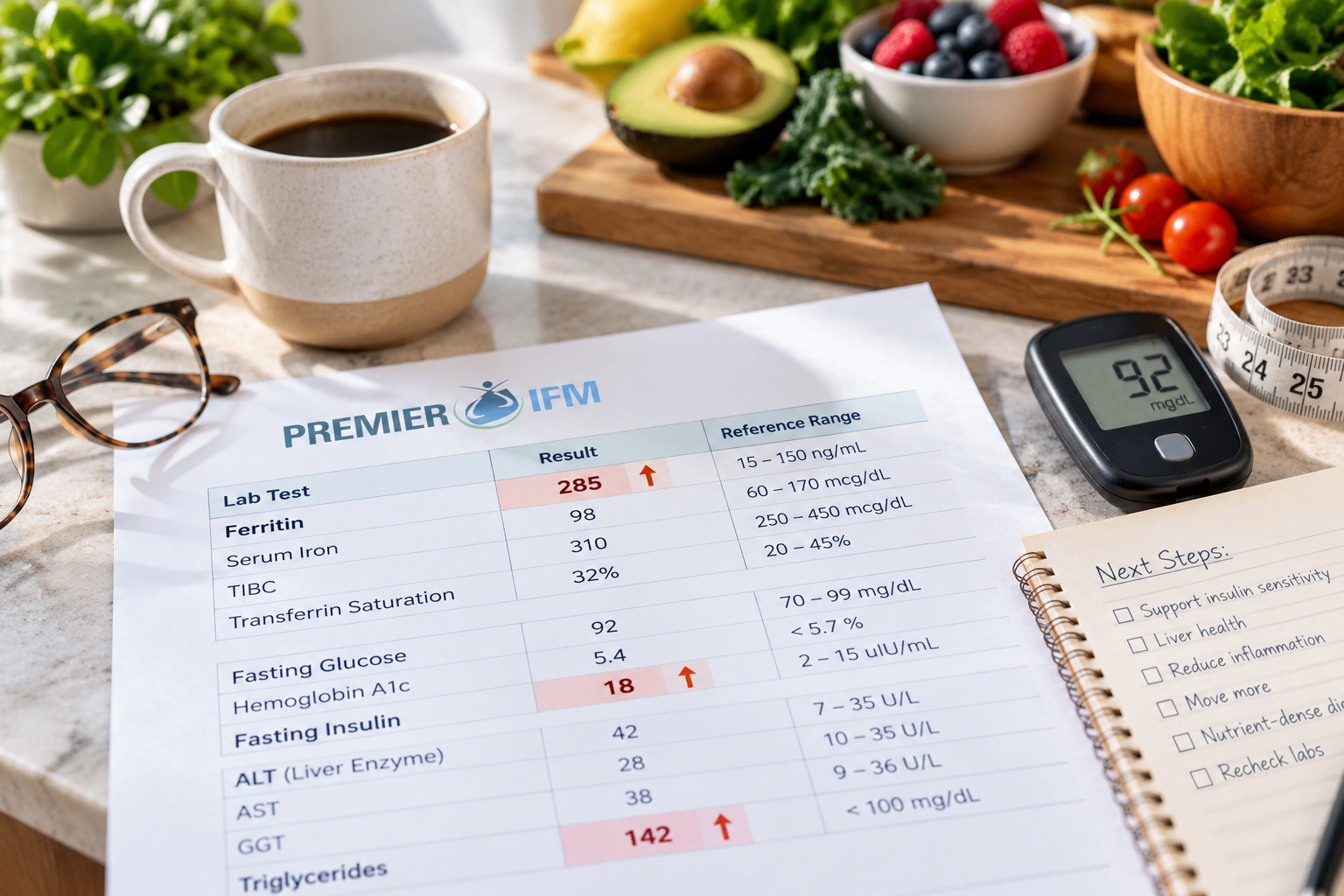
A high ferritin with normal serum iron and normal transferrin saturation points away from classic iron overload. Transferrin saturation is the percentage of your iron-carrying protein that is actually loaded with iron. A fasting value above roughly 45 to 50% alongside a high ferritin is what raises suspicion for hereditary hemochromatosis, especially with a family history, abnormal liver tests, or suggestive symptoms.
When ferritin is high and transferrin saturation is normal, the usual explanation is a secondary cause such as inflammation, alcohol, fatty liver, or metabolic syndrome. One liver biopsy study found that people with a transferrin saturation of 60% or higher had a hemochromatosis-like pattern with few metabolic abnormalities. Those with multiple metabolic abnormalities and fatty liver had a normal transferrin saturation.
Can You Have Insulin Resistance With a Normal A1c and Fasting Glucose?
Yes. In early insulin resistance, the pancreas makes more insulin to keep blood sugar in the normal range, so insulin can rise long before glucose or A1c do. In one study of more than 1,300 young adults in India, roughly 30% had elevated insulin, either fasting or after a glucose load, despite normal blood glucose and A1c. That is why a normal fasting glucose and A1c can't rule out early insulin resistance, and why I look at fasting insulin alongside them.
What Labs Should You Run if Your Ferritin Is High?
Ferritin should never be interpreted alone. A reasonable workup includes:
CBC
Serum iron, TIBC, and transferrin saturation (fasting, and ask your provider whether to pause any iron-containing supplements first)
Liver enzymes (ALT, AST, and GGT, which can also reflect alcohol intake)
Fasting glucose, fasting insulin, and A1c
Triglycerides and a full lipid panel
CRP
A review of alcohol intake and medications
Which of these matter most depends on your history. The goal is to sort out whether you are looking at inflammation, a liver issue, a metabolic pattern, or true iron overload.
Can You Lower Ferritin by Improving Metabolic Health?
Often, yes, when metabolic dysfunction drives it. In people with metabolic syndrome, weight loss and better control of blood sugar and blood pressure usually lower ferritin, and cutting back on alcohol brings it down within weeks to months. Improving insulin sensitivity, body composition, physical activity, diet quality, and liver health all work in the same direction.
But a persistent or substantially elevated ferritin still needs a proper evaluation, not a quick assumption that it's "just metabolic." A ferritin that is very high (above about 1,000), rising, or unexplained may need liver iron assessment, typically with MRI. Moderate elevations with normal transferrin saturation are commonly rechecked after a few months of lifestyle changes.
If your ferritin is high and you've been told it's either iron overload or nothing to worry about, ask what is actually driving it. We look at the whole picture, including iron, liver, insulin, and inflammation, before deciding what to do. Contact us, and we'll help you figure it out.
I'm Dr. Craig. Be happy, be healthy
Written by Dr. Craig Mortensen, DC, IFMCP, QME, IFM-Certified Functional Medicine Physician and founder of Premier IFM in Placentia, CA, serving patients throughout Orange County and Southern California.