
ATTENTION: PCOS - Polycystic Ovarian Syndrome is now PMOS - Polyendocrine Metabolic Ovarian Syndrome
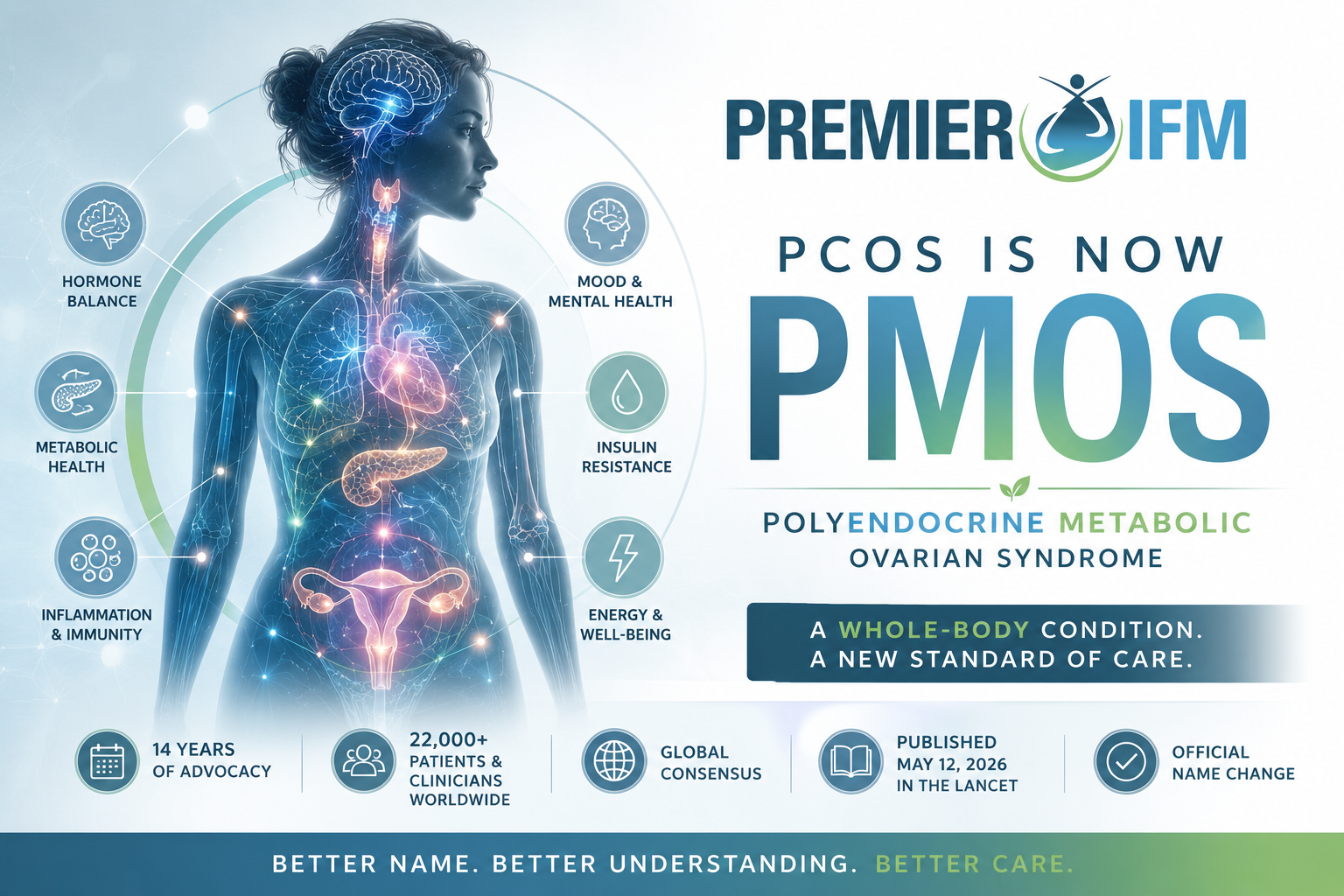
Premier IFM infographic - PCOS name change to PMOS, highlights the condition as a whole-body hormonal and metabolic disorder affecting insulin resistance, inflammation, hormone balance, and women’s health.
Important Update:
PCOS Has Been Renamed After 14 years of advocacy, research, and input from over 22,000 patients and clinicians worldwide, PCOS is now officially called PMOS — polyendocrine metabolic ovarian syndrome.
The name change, published May 12, 2026 in The Lancet, matters because the old name caused real harm. “Polycystic ovarian syndrome” led many patients and providers to believe this was primarily an ovarian condition, when in reality it is a complex hormonal and metabolic disorder that affects the entire body.
Better name, better understanding, better care.
This renaming is a major step forward in recognizing what many functional medicine practitioners have long observed: PMOS is not just about cysts it is rooted in hormone dysregulation, a metabolic dysfunction, and systemic inflammation. - PMOS (PolyENDOCRINE METABOLIC ovarian syndrome).
The ovary-focused name left countless patients undiagnosed or dismissed. In fact, an estimated 70% of cases go undiagnosed, often because providers were looking in the wrong place, for the wrong signs. The reality is that most women with PMOS don't even have cysts. Instead, they show up with irregular or missing periods, weight that won't budge no matter what they do, acne, hair thinning, bone-deep fatigue, mood swings, and difficulty getting pregnant — symptoms that span multiple body systems because PMOS is a multiple body system condition.
By shifting the medical focus toward hormone balance, metabolic health, and inflammatory patterns, this updated definition has the potential to help more women get diagnosed earlier, treated more comprehensively, and validated sooner.
How Functional Medicine Approaches PMOS
Here is where things haven’t changed: functional medicine has recognized for years that this condition extends far beyond the ovaries. Because PMOS is a hormonal and metabolic condition, treatment should go beyond symptom management alone.
A functional medicine approach looks at the underlying drivers that may contribute to PMOS symptoms, including:
insulin resistance
inflammation
blood sugar dysregulation
cortisol and stress response
gut health
nutrient deficiencies
hormone imbalances
Instead of using a one-size-fits-all approach, functional medicine focuses on identifying root causes and creating personalized treatment plans that may include nutrition changes, lifestyle support, targeted supplements, metabolic support, and hormone-balancing strategies.
Many women experience improvements in:
energy
menstrual regularity
weight management
acne
mood
fertility
metabolic health
The earlier PMOS is recognized and addressed, the better the long-term outcomes can be.