
Cold Laser Therapy vs. Cortisone Shots for Joint Pain: What Does the Research Really Show?
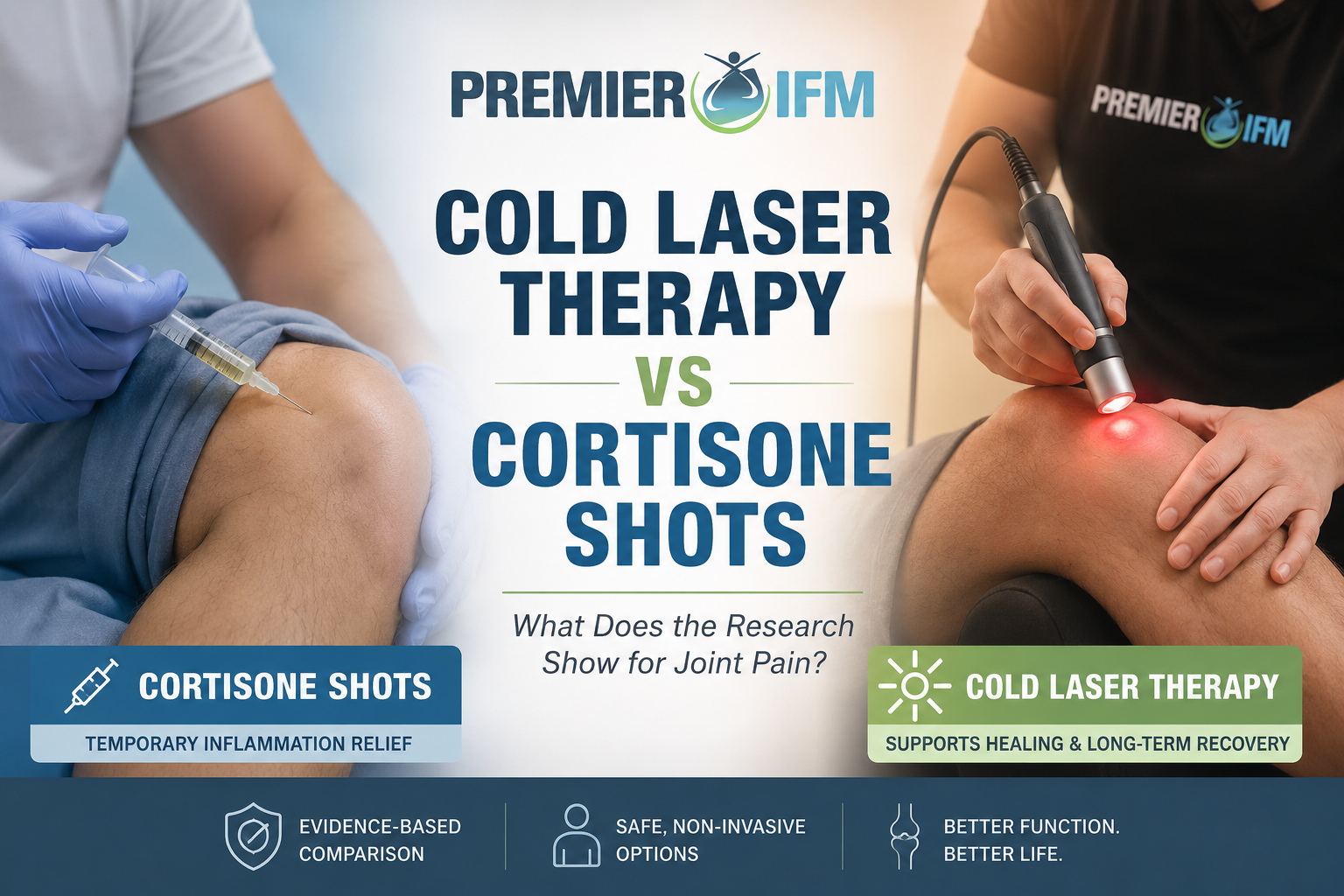
Cold laser therapy and cortisone shots both aim to reduce joint pain, but they work very differently. Research suggests cortisone provides temporary inflammation relief, while cold laser therapy may support healing and long-term recovery.
If you've been dealing with persistent joint pain — whether it's a creaky knee, an aching shoulder, or hip stiffness that just won't quit — chances are someone has recommended either a cortisone shot or cold laser therapy.
But which one actually works better?
The answer depends on your goals. One treatment is designed to temporarily suppress inflammation. The other aims to stimulate healing and reduce pain naturally over time.
Here’s what current research says about cold laser therapy versus cortisone shots for joint pain.
What are Cortisone Shots and What are the Risk?
Cortisone injections deliver a corticosteriod medication directly into a joint, tendon sheath, or bursa. The steriod crosses cell membrains and triggers a cascade of anti-inflammatory effects — supressing pro -inflammatory cytokines and reducing inflammation, which in turn can reduce pain for weeks to months.
Cortisone Injections DO give fast pain relief, can calm severe inflammation quickly, they can be covered by insurance, and are helpful during acute flare-ups. However, there is a potential downside. Repeated injections can cause cartilage degeneration, tendon weakening, temporary immune suppression, joint damage with frequent use and pain often returns after relief wears off. Unfortunatelly, research has shown that repeated corticosteriod injections may accelerate cartilage loss in osteoarthritis patients and injection are frequency is limited. Other side effects include blood sugar spikes, joint infection, and systemic effects such as adrenal function.
What is Cold Laser Therapy and What are the Risks?
Cold laser therapy also known as Low-Level Laser Therapy (LLLT) or photobiomodulation uses specific wavelengths of light to stimulate cellular repair and reduce inflammation without heat or surgery.
Unlike surgical lasers, cold lasers do not cut tissue or create heat damage.
Instead, they work by helping cells produce more energy (ATP), improving circulation, and decreasing inflammatory chemicals in the tissue.
Cold laser like cortisone shots is commonly used for arthritis pain, knee osteoarthritis, tendon injuries, and joint stiffness, but is also used in muscle pain, chronic inflammation and neuropathy.
The research on cold laser is newer but has gotten pretty strong in recent years. A 2025 narrative review published in Osteoarthritis and Cartilage Open found that low-level laser therapy improved pain, stiffness, and function in osteoarthritis patients, especially when combined with exercise or rehabilitation programs. Researchers also noted an “excellent side-effect profile.”
A 2023 study published in Scientific Reports compared LLLT at two different wavelengths (808 nm and 660 nm) versus sham treatment in knee osteoarthritis patients over eight weeks. Both active laser groups showed improvements in muscle strength and functional performance — including stair climbing, walking speed, and the Timed Up and Go test — compared to the control group.
One key finding across studies: dosing matters enormously. Trials that used doses below the therapeutic range found no difference between active and sham laser. This suggests that underpowered devices or inadequate treatment protocols may explain some of the mixed results seen in older or lower-quality studies.
So are there risks to cold laser? Cold laser is considered very safe when performed correctly. Reported side effects do occur and are minimal compared to cortisone injections or surgery. These include, mild temporary soreness, temporary increase in symptoms, skin redness or warmth, and a small number of patients reported feeling tired or fatigued after treatment especially after longer sessions or multiple treatment areas.
Cold Laser Therapy vs. Cortisone Shots: The Biggest Difference
The key difference is this:
Cortisone injection suppresses inflammation temporarily but quickly.
Cold laser non-invasive therapy attempts to support tissue healing and cellular recovery but gives pain relief gradually.
Cortisone is often used as a quick pain-management tool.
Cold laser therapy is generally used as part of a longer-term healing and rehabilitation strategy.
That doesn’t necessarily mean one is always “better” than the other. In some cases, they may even complement each other. But for patients looking to avoid repeated steroid injections, cold laser therapy has become an increasingly popular non-invasive option.
Who May Be a Good Candidate for Cold Laser Therapy?
Cold laser therapy may be worth discussing with your provider if you:
Want to avoid repeated cortisone injections
Have chronic joint pain or arthritis
Prefer non-invasive treatment options
Want to stay active naturally
Looking for healing support alongside therapy not just a pain coverup
Final Thoughts
Cortisone injections still have an important role in pain management — especially for severe flare-ups and acute inflammation.
But growing research suggests cold laser therapy may offer a promising alternative for long-term joint pain management, particularly when paired with movement therapy, strengthening, and lifestyle changes.
For many patients, the real question isn’t just “How do I reduce pain today?”
It’s:
“How do I support healthier joints long term?”
And that’s where cold laser therapy is gaining attention.
*This blog post is for informational purposes only and does not constitute medical advice. Always consult a qualified healthcare provider before starting any new treatment.