
The Delicate Balance of Inflammation
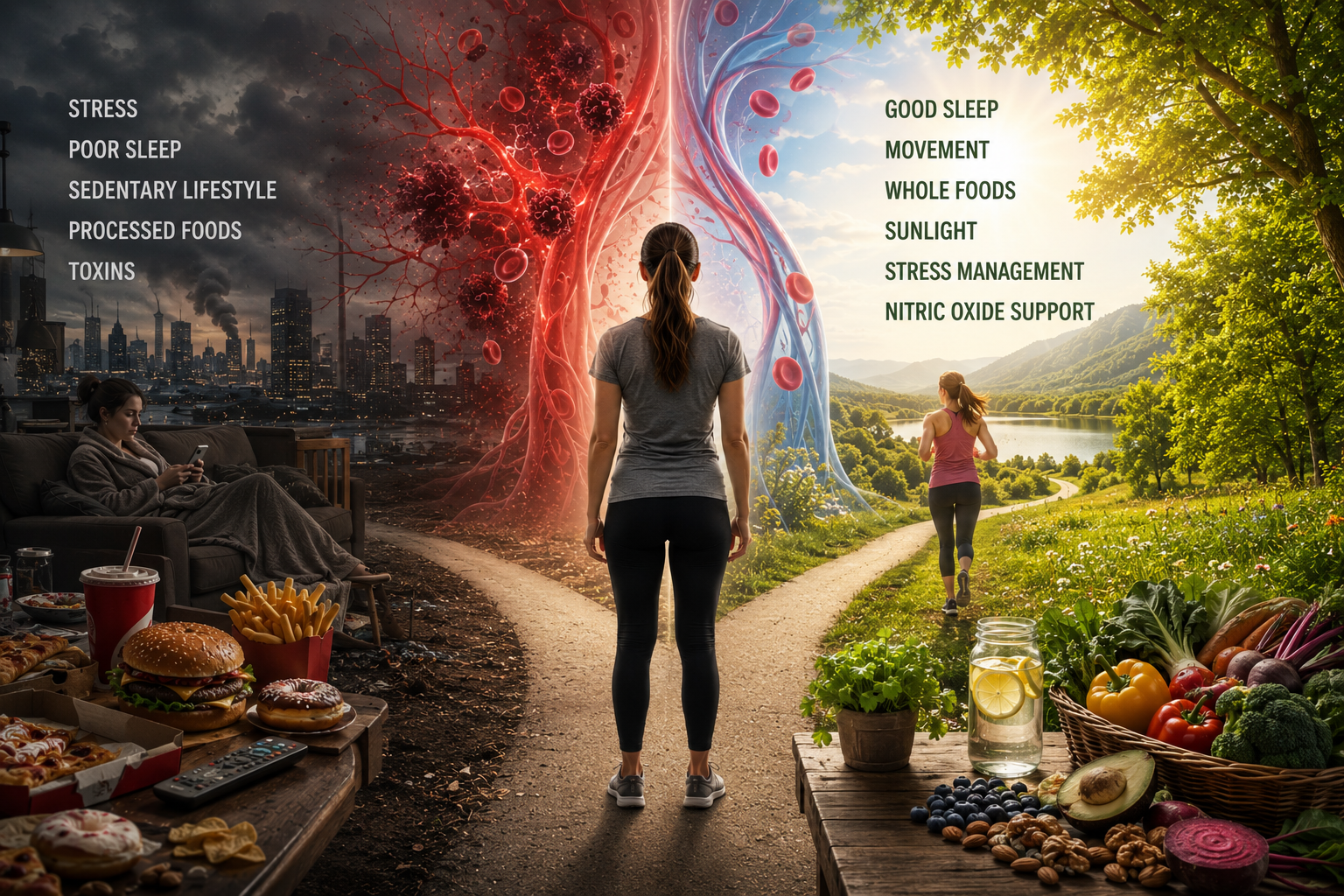
The delicate balance of inflammation: daily lifestyle choices can either fuel chronic inflammation or support healing, healthy blood flow, and long-term wellness.
We hear all the time that inflammation is bad — that it’s the root cause of disease, that we need to reduce inflammation, and that most of the Standard American Diet increases inflammation. It seems like everything today causes inflammation. There is so much information out there about it, but is inflammation actually all bad?
When I research the body, I always like to ask one question first: Why was the body created to do this? What purpose does it serve? And inflammation is no different.
Inflammation actually serves a very important purpose in the body. It is one of the immune system’s natural defense mechanisms against injury, infection, and harmful toxins. Inflammation helps us heal, and surprisingly without it, we wouldn’t survive. Interesting tidbit… have you ever heard that steroids lower immunity? One reason is because steroids suppress inflammatory pathways.
So what exactly is inflammation?
Inflammation is the body’s response to anything that throws it out of balance. This can include anything from a tiny paper cut, to a broken bone, to a food that irritates your gut. Anytime part of the body is no longer in homeostasis — a state of delicate equilibrium — the body begins sending signals that activate different healing responses.
For example, during an infection, blood vessels dilate to increase blood flow to the area. Blood carries oxygen, nutrients, and immune cells that the body needs for healing. Chemicals called prostaglandins are released, causing pain and swelling. While pain may seem negative, it actually serves an important purpose by alerting us that something is wrong, in our family we do not try to completely remove pain when it’s there by suppressing it. We do try to manage it but not completely remove it. When you are always suppressing pain, you are essentially shutting down your bodies defense mechanism. Other chemicals called pyrogens can increase body temperature to help slow bacterial growth so the body can begin repairing itself.
Our bodies use inflammation anytime we experience injury, infection, or exposure to something harmful. Inflammation itself is not the enemy. The problem begins when inflammation gets out of hand.
Inflammation can be triggered by toxins, infections, injuries, chronic stress, poor sleep, processed foods, environmental chemicals, and basically anything the body sees as harmful or unnecessary. In many cases, inflammation happens silently inside the body long before we ever feel symptoms.
For example, let’s say we go to a fast food restaurant and eat food that has been heavily processed and deep fried in damaged oils. That food contains chemicals and altered fats that the body does not recognize as natural. Deep frying changes the structure of food so much that, in some cases, the body barely recognizes it as food anymore. As the body tries to break it down, it encounters these foreign substances and activates the immune system to deal with them by creating oxidative stress and inflammatory response.
Over time repeated exposure to highly processed foods and inflammatory compounds can begin damaging the gut lining itself. When the gut lining becomes compromised, inflammatory compounds and partially digested food particles can leak into the bloodstream, further activating the immune system and increasing inflammation throughout the body.
This creates low-grade inflammation that you may not feel immediately, but over time, repeated exposure keeps the immune system activated. The body was designed to handle short bursts of inflammation and then return back to balance. But when inflammatory triggers are constant, the body can become stuck in a chronic inflammatory state.
This is where inflammation starts to become harmful.
Another major piece of the inflammation puzzle is something called oxidative stress. Oxidative stress occurs when there is an imbalance between free radicals and antioxidants in the body. Free radicals are unstable molecules that can damage cells, proteins, and even DNA. While some free radicals are produced naturally through normal metabolism, excessive amounts can come from processed foods, smoking, pollution, chronic stress, lack of sleep, infections, and exposure to toxins. When inflammation becomes chronic, oxidative stress also increases, creating a cycle where inflammation produces more oxidative stress, and oxidative stress creates even more inflammation. One of the major problems with oxidative stress is that it damages the endothelial lining of blood vessels and reduces nitric oxide availability. As nitric oxide levels decline, blood vessels lose their ability to relax and function properly, increasing the risk of high blood pressure, plaque buildup, heart disease, and other chronic illnesses.
One of the first places chronic inflammation damages, is the lining of our blood vessels, called the endothelium. The endothelium plays a critical role in keeping blood flowing properly throughout the body. It also produces an incredibly important molecule called nitric oxide.
Nitric oxide (NO) helps blood vessels relax and widen, improves circulation, lowers blood pressure, helps prevent excessive clotting, and reduces inflammation inside the vessels themselves. In many ways, nitric oxide acts as one of the body’s natural protectors of cardiovascular health. You could almost think of NO as the body’s own built-in medicine.
Unfortunately, nitric oxide naturally declines with age. Have you ever heard the saying, “what you do in your 20’s affects how you feel in your 40’s and beyond?” Well, if not remember it — because it is very true. While some decline is normal with aging, things like poor diet, smoking, chronic stress, lack of exercise and a sedentary lifestyle all reduce nitric oxide production even further. Over time, this combination can significantly worsen circulation, blood vessel health, and inflammation. On the other hand, regular exercise helps stimulate nitric oxide production, which is one reason movement is so important for long-term cardiovascular health.
However, chronic inflammation and oxidative stress begin damaging the endothelium and reducing nitric oxide production. As nitric oxide levels decrease, blood vessels become stiffer and narrower, circulation worsens, blood pressure rises, and plaque can begin forming along artery walls. Over time, this contributes to heart disease, strokes, and other cardiovascular problems.
This is one reason chronic inflammation is now linked to so many modern diseases, including heart disease, diabetes, obesity, autoimmune disease, arthritis, Alzheimer’s disease, and even certain cancers. The immune system stays activated for too long, and the body slowly begins damaging its own tissues in the process.
What makes chronic inflammation especially dangerous is that it can remain silent for years. Many people feel relatively normal while damage is slowly occurring beneath the surface. The body is incredibly adaptable, so symptoms often do not appear until inflammation has already contributed to significant dysfunction or disease.
Inflammation itself is not bad. In fact, we need it to survive and heal. The key is balance. The body was designed for temporary inflammation followed by recovery — not for constant inflammatory overload.
Acute vs Chronic Inflammation: I’ve talked a little about both, but let’s really get into the difference here. Acute inflammation is sudden in response to an injury or illness. Acute is temporary and healing. Chronic inflammation is ongoing inflammation that usually arrises out of consistent small invaders to the body over time. Chronic inflammation is damaging.
Now that you have a better understanding of inflammation and how it is a natural response, the next question is: can you actually do anything about it?
The answer is yes — there is a lot you can do. Certain lifestyle changes can help support the body, reduce chronic inflammation, improve nitric oxide production, and bring the body back toward balance. These are things we talk about with our patients all the time, no matter what they originally come to us for.
Sleep: Getting a good night’s sleep is crucial. Sleep is when your body repairs itself, your brain clears out waste, and your nervous system has time to rest and reset. Poor sleep increases stress on the body and can contribute to inflammation.
Exercise and Movement: Lift weights, walk, stretch, bike, play pickleball, do yoga — whatever gets you moving consistently. Movement improves blood flow, supports nitric oxide production, and helps deliver oxygen and nutrients to the tissues that need them. You really should not go a whole day without some form of movement.
Whole Foods: Eat foods that grow and have lived at some point. Real, natural, whole foods give your body the nutrients it needs to heal, repair, and function properly. When our kids were little and they would ask for a snack, our response was always, “Have something that grows.” That is still great advice. Eat growing food to support a living body.
Sunlight: Sunlight helps support your natural circadian rhythm, which plays a major role in your sleep cycle, hormone balance, and overall health. Sun exposure also helps your body produce vitamin D naturally, which supports immune function and helps regulate inflammation.Stress Management: Stress reeks havoc on your body. Yoga, walk, healthy foods, good sleep all can reduce stress.
Stress Management: Stress wreaks havoc on the body. Chronic stress keeps the nervous system on high alert, which can increase inflammation over time. Walking, yoga, prayer, deep breathing, time outside, healthy food, and good sleep can all help reduce stress and support healing.
Nitric Oxide Support: Certain foods, especially beets and leafy greens, help support nitric oxide production. Since nitric oxide plays such an important role in blood vessel health, circulation, and inflammation, eating these foods regularly is one simple way to support your cardiovascular system.
At the end of the day, reducing chronic inflammation is not about perfection. It is about consistently giving your body what it needs more often than not. Sleep well, move your body, eat real food, get sunlight, manage stress, and support healthy blood flow. Your body was designed to heal, but it needs the right environment to do so.