
Organ Meats & Beef Liver Supplements: Benefits, Risks, Side Effects, and What Most People Don’t Know
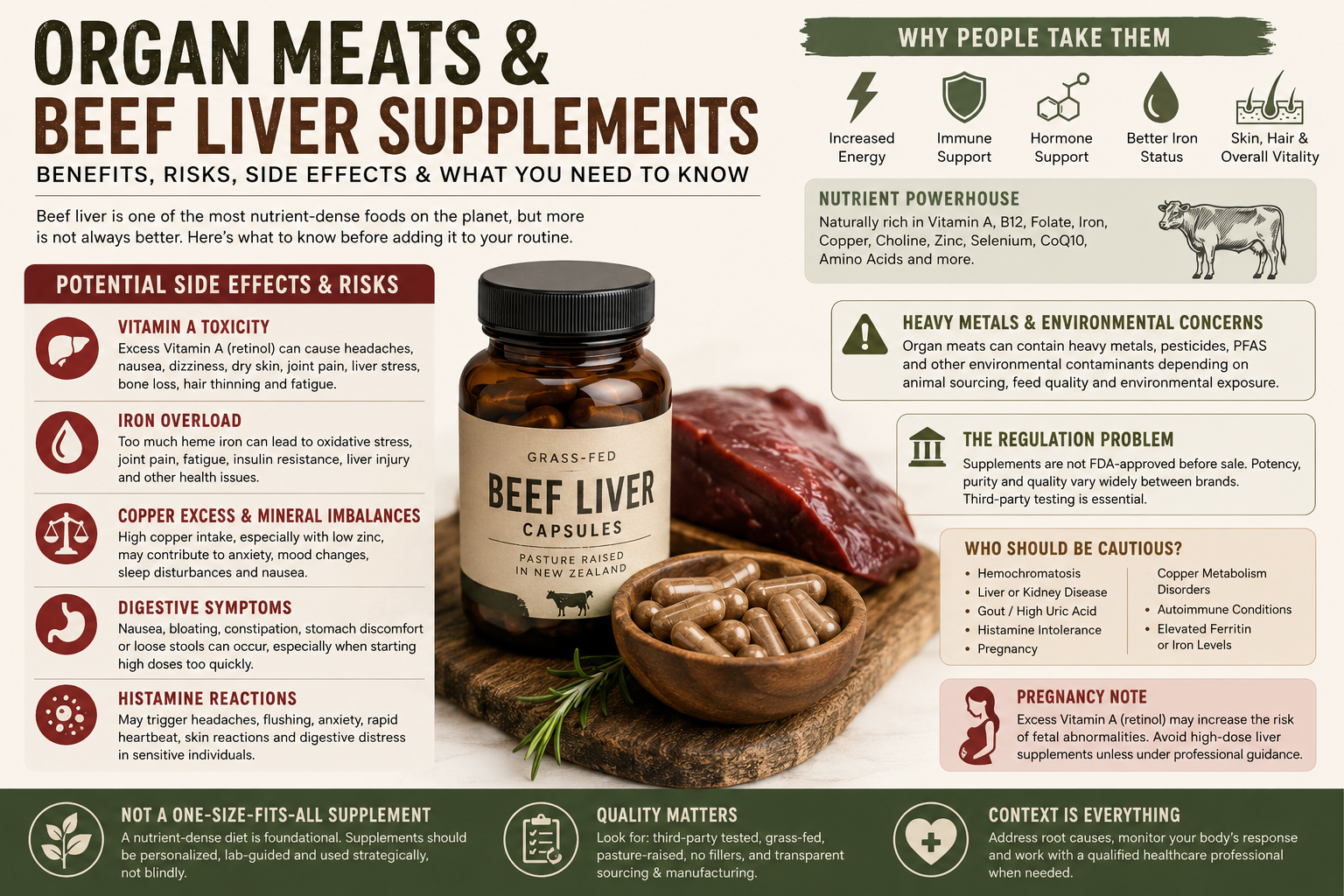
Risks and side effects of Organ and Beef liver supplements
Organ meats have made a major comeback in the health and wellness world. Beef liver capsules, freeze-dried organ blends, and “ancestral nutrition” supplements are now heavily promoted for energy, hormones, metabolism, fertility, and overall vitality.
There’s no question that liver and other organ meats are nutrient-dense foods. But there’s also an important conversation that often gets ignored: the risks, side effects, quality concerns, and lack of regulation surrounding many organ supplements.
Before adding beef liver supplements to your routine, it’s important to understand both the potential benefits and the potential downsides.
Why People Take Beef Liver Supplements
Beef liver is considered one of the most nutrient-rich foods on the planet. It naturally contains:
Vitamin A (retinol)
Vitamin B12
Folate
Iron
Copper
Choline
Zinc
Selenium
CoQ10
Amino acids and peptides
Many supplement companies market beef liver products as a “natural multivitamin” and claim benefits such as:
Increased energy
Improved athletic performance
Better hormone support
Enhanced fertility
Improved skin and hair health
Reduced fatigue
Better iron status
For some individuals — especially those with nutrient deficiencies — organ meats may provide meaningful nutritional support. However, more is not always better.
Potential Side Effects of Beef Liver Supplements
1. Vitamin A Toxicity
One of the biggest concerns with liver supplementation is excessive vitamin A intake.
Unlike beta carotene from vegetables, liver contains preformed vitamin A (retinol), which accumulates in the body more easily.
Too much vitamin A can lead to:
Headaches
Nausea
Dizziness
Dry skin
Joint pain
Bone loss
Liver stress
Hair thinning
Fatigue
In severe cases, chronic toxicity may contribute to:
Liver damage
Increased intracranial pressure
Birth defects during pregnancy
This becomes especially concerning when people combine:
Beef liver supplements
Multivitamins
Cod liver oil
High-retinol skincare products
Fortified foods
Many people unknowingly stack multiple vitamin A sources.
2. Iron Overload
Beef liver is rich in heme iron, which is highly absorbable.
While this may benefit individuals with iron deficiency, excess iron can become problematic — particularly for people with:
Hemochromatosis gene variants
Liver disease
Men and postmenopausal women with already-normal iron levels
Excess iron may contribute to:
Oxidative stress
Joint pain
Insulin resistance
Cardiovascular issues
Liver injury
More iron is not automatically healthier.
3. Copper Excess & Mineral Imbalances
Liver is also very high in copper.
Copper is essential in small amounts, but excessive intake — especially when zinc intake is inadequate — may contribute to:
Anxiety
Mood changes
Hormonal imbalance
Nausea
Neurological symptoms
Some individuals are particularly sensitive to copper accumulation.
4. Digestive Symptoms
Some people experience gastrointestinal side effects when starting organ supplements, including:
Nausea
Bloating
Constipation
Stomach discomfort
Loose stools
This may occur due to:
High nutrient concentration
Histamine sensitivity
Fat metabolism issues
Poor supplement quality
Starting with high doses too quickly can worsen symptoms.
5. Histamine Reactions
Organ meats may trigger symptoms in individuals with histamine intolerance.
Potential symptoms include:
Headaches
Flushing
Anxiety
Rapid heartbeat
Skin reactions
Digestive distress
Poorly processed or improperly stored organ products may worsen this issue.
Heavy Metals & Environmental Concerns
One of the most misunderstood topics is whether liver “stores toxins.”
Technically, the liver processes toxins rather than storing them long term. However, organ tissues can still contain:
Heavy metals
Environmental contaminants
Pesticides
PFAS chemicals
Drug residues
This depends heavily on:
Animal sourcing
Farming practices
Feed quality
Environmental exposure
Not all beef liver supplements are created equal.
The Regulation Problem
Many consumers assume supplements are heavily regulated like prescription medications. They are not.
In the United States, dietary supplements are regulated under the Dietary Supplement Health and Education Act (DSHEA) of 1994, which places much of the responsibility for safety and labeling on the manufacturer.
This means:
Products are not FDA-approved before sale
Potency may vary
Ingredient quality can vary
Testing standards differ between companies
Contamination screening is inconsistent
Some supplements may contain:
Less active ingredient than advertised
More vitamin A or iron than expected
Fillers or contaminants
Oxidized ingredients
Third-party testing matters.
Freeze-Dried vs. Desiccated Liver: Does It Matter?
Many products use terms like:
Freeze-dried
Grass-fed
Desiccated
Pasture-raised
These labels sound impressive, but quality still varies significantly.
Important considerations include:
Third-party testing
Heavy metal screening
Hormone and antibiotic practices
Source transparency
Manufacturing standards
Storage methods
“Grass-fed” alone does not guarantee purity or safety.
Pregnancy & Beef Liver Supplements
Pregnant women should be especially cautious with liver products.
While vitamin A is essential during pregnancy, excessive retinol intake may increase the risk of fetal abnormalities.
This is why many prenatal providers recommend avoiding high-dose liver supplements unless carefully supervised.
Who Should Be Careful with Organ Supplements?
You should use caution or consult a healthcare professional if you have:
Hemochromatosis
Liver disease
Kidney disease
Gout
High uric acid
Histamine intolerance
Pregnancy
Copper metabolism disorders
Autoimmune disease flare-ups
Elevated ferritin or iron levels
Lab testing may be appropriate before long-term use.
Are Organ Supplements Necessary?
For many healthy individuals eating a nutrient-dense diet, organ supplements may not be necessary.
Social media often promotes them as a cure-all for:
Fatigue
Hormones
Metabolism
Brain fog
Testosterone
Adrenal health
But symptoms like fatigue and low energy can stem from many root causes, including:
Sleep dysfunction
Blood sugar imbalance
Thyroid issues
Chronic inflammation
Gut dysfunction
Nutrient deficiencies
Stress physiology
A supplement should not replace proper evaluation and individualized care.
A Functional Medicine Perspective
From a functional medicine standpoint, organ meats can sometimes be useful tools — but they should be used strategically, not blindly.
The goal should always be:
Personalized assessment
Appropriate dosing
Lab-guided decisions
High-quality sourcing
Monitoring for side effects
More nutrients are not always better. Balance matters.
Final Thoughts
Beef liver and organ supplements are not inherently “bad,” but they are also not risk-free superfoods.
They can provide meaningful nutrition for some individuals, while causing side effects or imbalances in others.
The most important questions aren’t:
“Is beef liver healthy?”
“Is this supplement ancestral?”
The better questions are:
Is this appropriate for your body?
Are you deficient in what it provides?
Is the product high quality?
Are you monitoring for excess?
Are you addressing the root cause of your symptoms?
In nutrition and functional medicine, context matters far more than trends.